
Door-to-Door vs. Terminal-to-Terminal Car Shipping
Should the truck come to your driveway, or should you drop the car at a lot? Here is how the two delivery models actually differ on price, convenience, and risk, and which one is right for you.
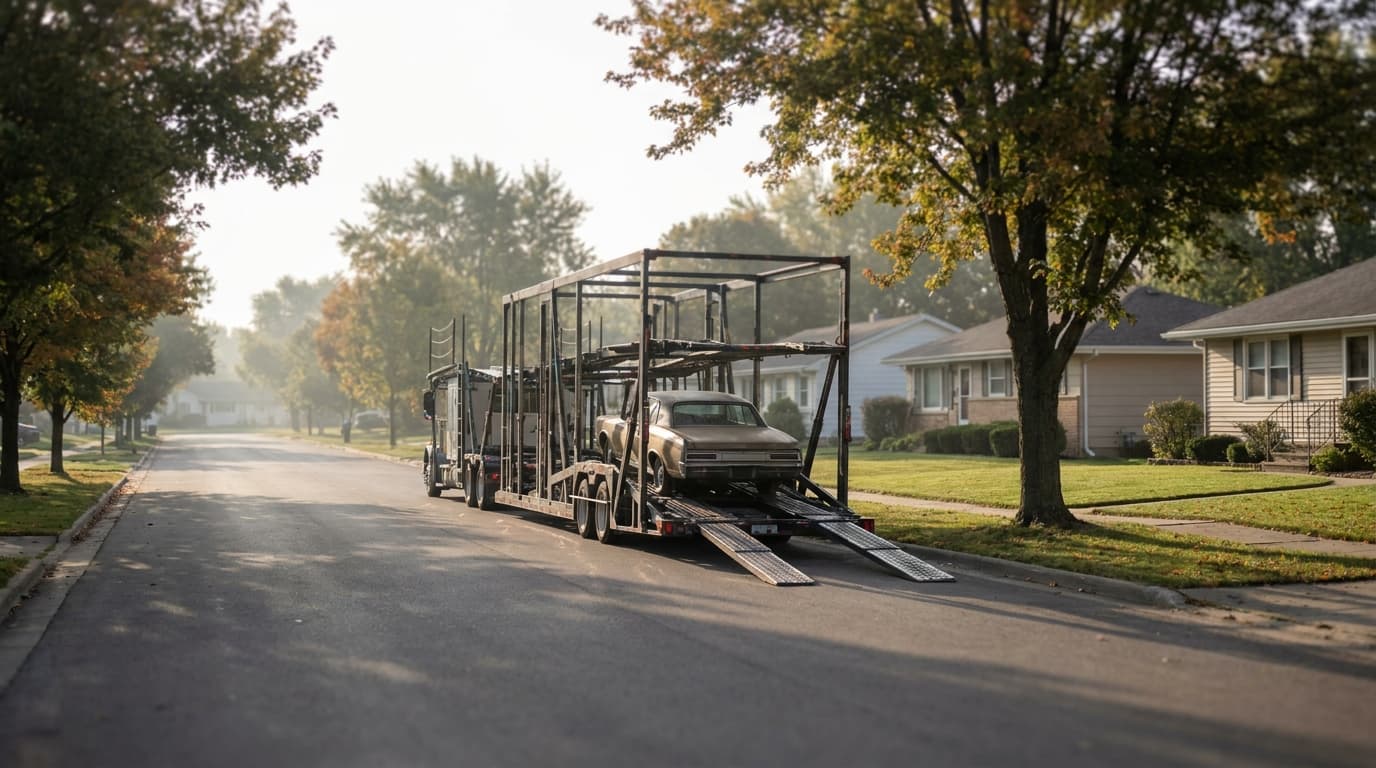
When you book a car shipment, you choose how the handoff happens at each end. The two options are door-to-door, where the carrier comes to you, and terminal-to-terminal, where you drop the car at a lot and pick it up from another. Door-to-door is what most people want and what most brokers quote by default, but terminal service still exists and occasionally makes sense. Here is the honest comparison so you pick the right one instead of the one you were handed.
Door-to-door, explained
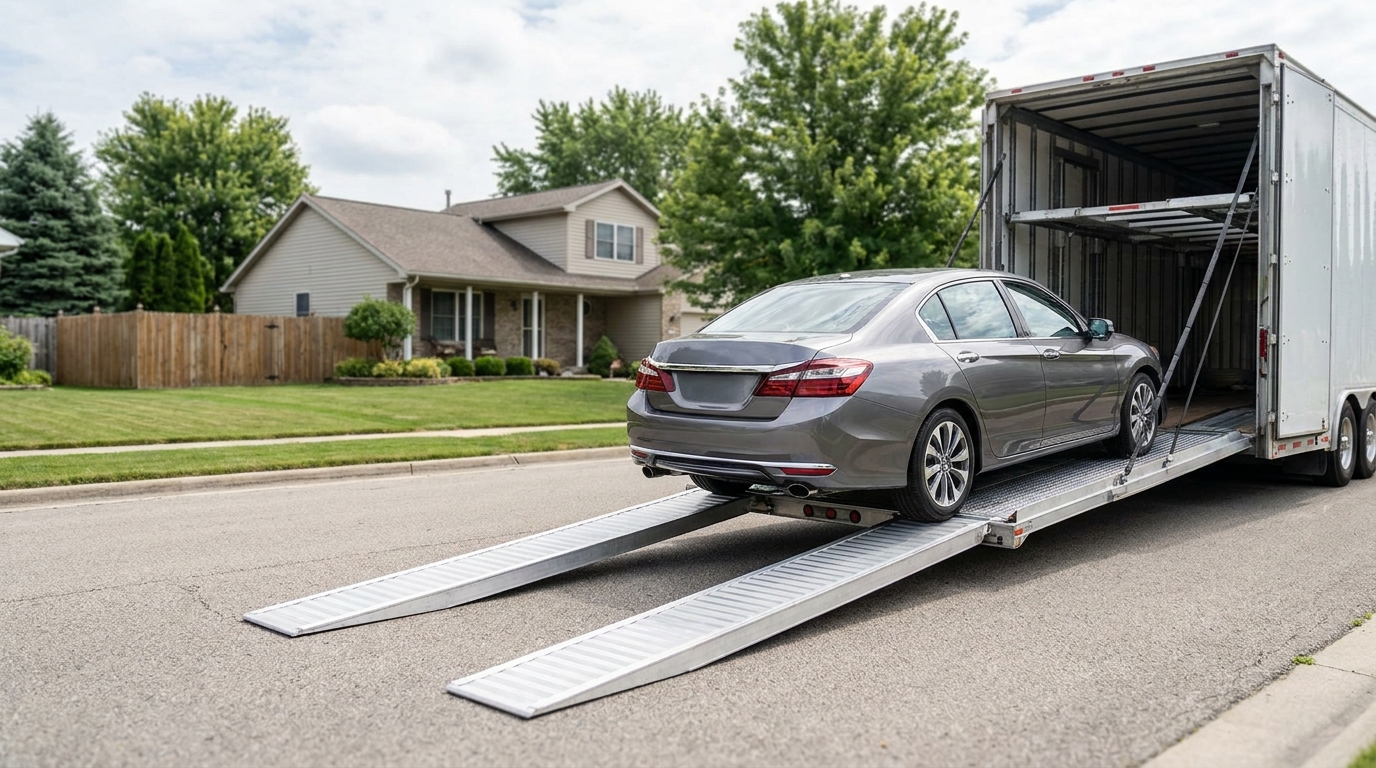
Door-to-door means the driver picks the car up as close to your address as they safely and legally can, and delivers it as close to the destination address as possible. It is the default for a reason: it is convenient, and it keeps your car in the carrier's hands the entire time with no extra handling.
The one nuance people misread is the phrase "to your door." A full-size auto carrier can be seventy-five feet long and cannot fit down a narrow street, under low branches, or into a tight cul-de-sac. When that happens, the driver will ask to meet somewhere nearby with room to maneuver, like a large parking lot at a store or shopping center. That is normal, it is still door-to-door service, and it is not a downgrade. If you live somewhere a big rig genuinely cannot reach, expect to meet a few minutes away.
Door-to-door is the right call when:
- You want maximum convenience
- You want the car handled as little as possible
- You are shipping a valuable vehicle and want to minimize handoffs
- You do not live near a transport terminal, which is most people
Terminal-to-terminal, explained
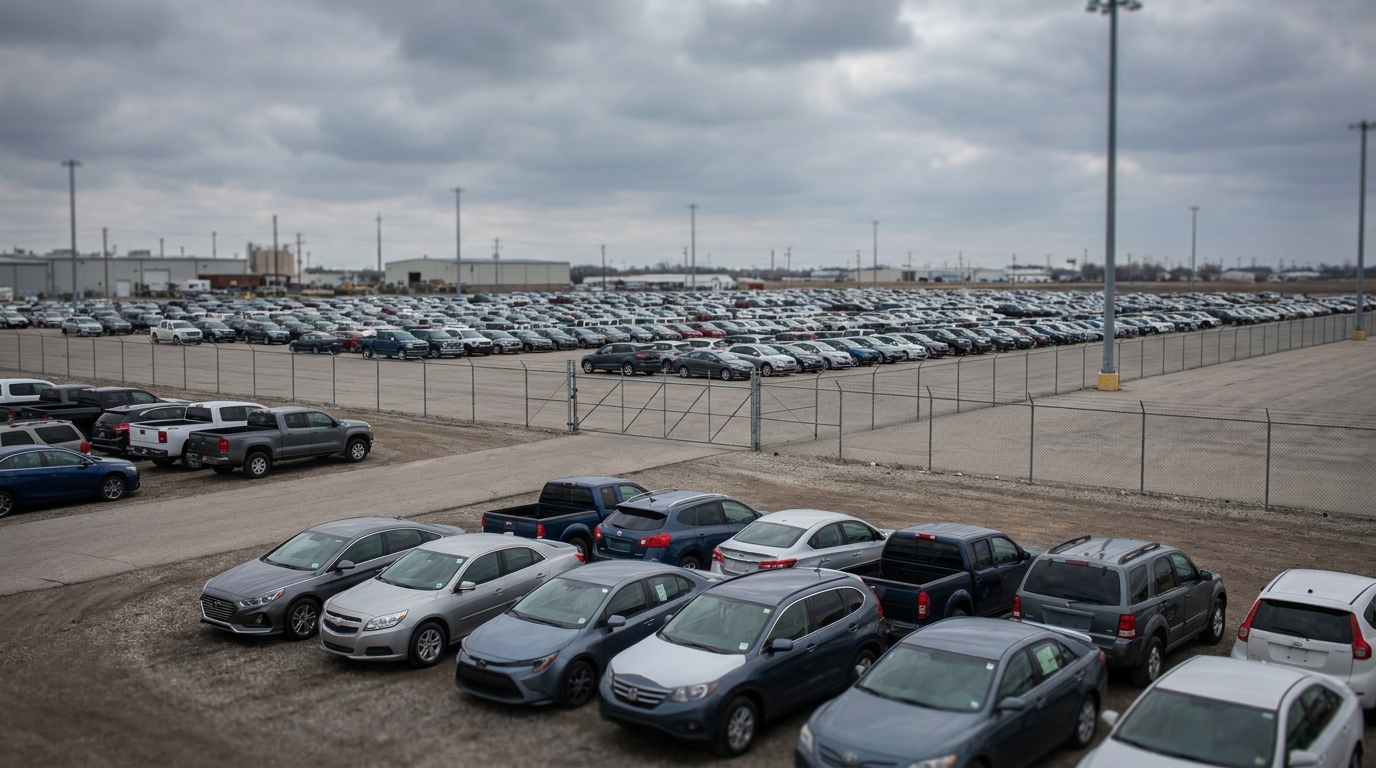
Terminal-to-terminal means you drive the car to a storage lot or depot, the carrier collects it from there on its own schedule, hauls it to a terminal near the destination, and you pick it up from that second lot. It was more common in an earlier era of the industry and has become the exception rather than the rule.
The theoretical upside is scheduling flexibility, since the car sits at a terminal waiting for a truck rather than you coordinating a pickup window at home. In some cases the line-haul portion can be quoted slightly cheaper. But those advantages are usually eaten up by the downsides.
The real drawbacks of terminal service:
- Storage fees. Terminals often charge for each day your car sits waiting, and those fees can quickly erase any savings.
- More handling. Your car is loaded and unloaded more times, and every extra handoff is another chance for a ding or a lot mishap.
- Less oversight. While the car sits in a lot, it is exposed and out of your sight, sometimes for days.
- You do the driving. You have to get the car to the origin terminal and collect it from the destination terminal, which may be nowhere near you.
- Availability. Terminals only exist in certain metro areas, so this option may not even be offered on your route.
The price question
People often assume terminal-to-terminal is meaningfully cheaper. In practice the gap is usually small, and storage fees, plus the cost and hassle of driving to and from the terminals, frequently make the total more expensive than door-to-door once everything is counted. Do not choose terminal service to save money without adding up storage days and your own driving time and fuel. The sticker on the line-haul is not the real total.
For a full breakdown of what actually moves your price, see How Much Does It Cost to Ship a Car.
When terminal service actually makes sense
It is not always the wrong choice. Terminal-to-terminal can fit when:
- Your schedule is genuinely impossible for a door pickup window and a terminal near you lets the car wait
- You are shipping between two major cities that both have convenient terminals close by
- You are comfortable trading a little oversight for flexibility and the numbers genuinely work out lower
For most individual shippers moving one car, though, door-to-door wins on convenience, on handling, and often on total cost once the hidden terminal costs are added in.
The bottom line
Default to door-to-door. It brings the carrier to you or to a nearby lot, keeps your car handled as little as possible, and is usually the better total value once terminal storage and your own driving are counted. Reach for terminal-to-terminal only in the narrow cases where a nearby terminal solves a real scheduling problem and the full math actually comes out ahead. When you compare quotes, confirm which model each price assumes, because a door-to-door quote and a terminal quote are not the same product.
See real prices, no phone number required
We show named broker prices side by side, labeled by where each number came from. We never ask for your contact info to show you a quote.