
How Car Shipping Works: A Beginner's Guide to Auto Transport
Never shipped a vehicle before? This is the plain-English walkthrough of how auto transport actually works, from the moment you request a price to the day your car rolls off the truck.
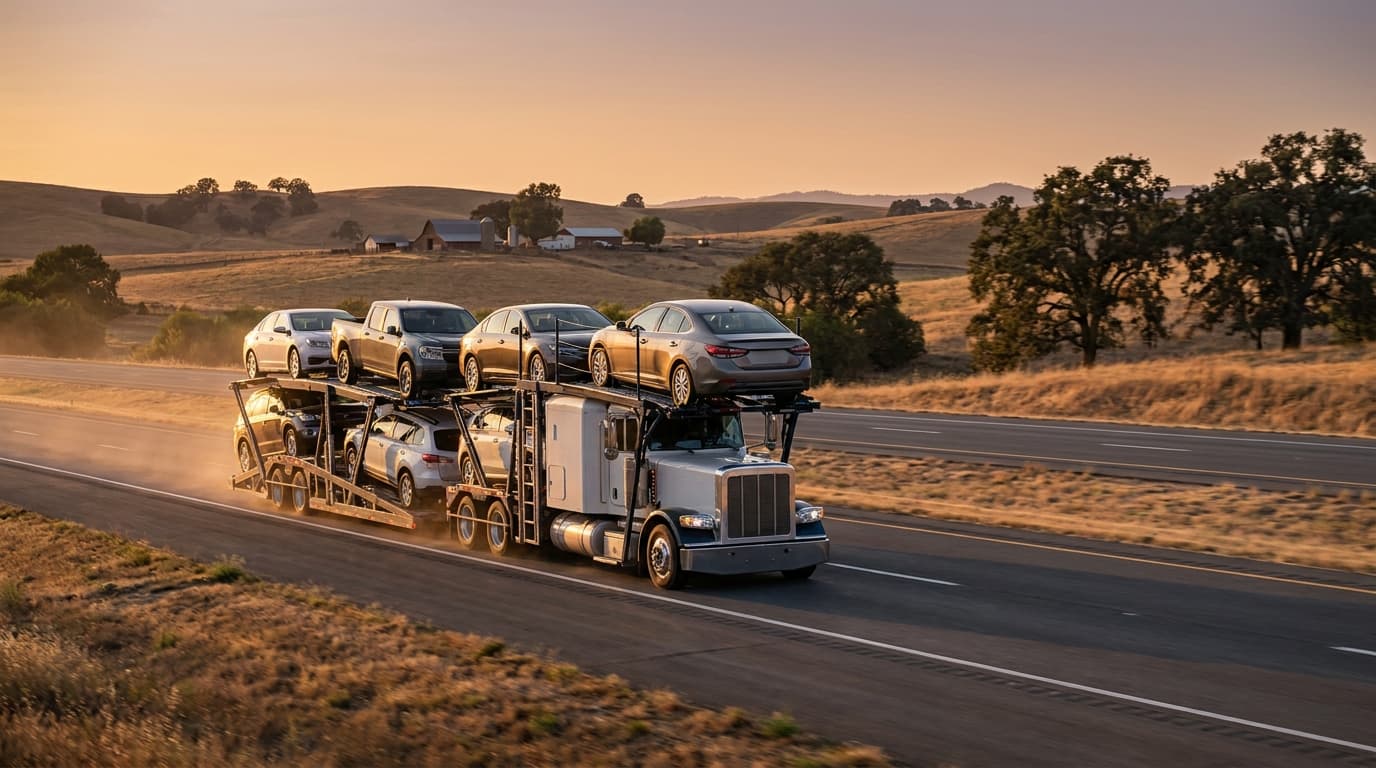
If you have never shipped a vehicle, the industry can feel deliberately confusing. You fill out one form and your phone rings for a week. Prices swing by hundreds of dollars for the same route. Everyone calls themselves a "carrier" even when they never touch a truck. This guide strips all of that away and walks you through what actually happens when a car moves from one city to another, so you can book with confidence and know when something is off.
The short version
Auto transport is the business of moving a vehicle you do not want to, or cannot, drive yourself. A truck with a specialized trailer picks the vehicle up, hauls it hundreds or thousands of miles, and drops it off. Most of the time you are not hiring the truck directly. You are hiring a broker who finds a truck for you. That single fact explains most of what feels strange about the industry, and we will come back to it.
A typical move looks like this:
- You get a price for your route and vehicle.
- You book, and the job is posted to a national load board that drivers watch.
- A carrier accepts the job and schedules a pickup window.
- The driver inspects and loads your vehicle, and you both sign a condition report.
- The vehicle travels, usually 300 to 500 miles per day.
- The driver delivers it, you inspect it again, and you pay any balance due.
The whole thing usually takes anywhere from a couple of days on a short regional move to a week or more coast to coast. Now let us slow down and look at each part.
Brokers, carriers, and why it matters
This is the single most important thing to understand before you spend a dollar.
A carrier is the company that owns the truck and physically hauls your car. Most carriers are small. A large share of the market is owner-operators running one or two trucks. They are excellent at driving and terrible at marketing, and they cannot afford to advertise for every empty spot on their trailer.
A broker is a licensed middleman who takes your order, posts it to a load board, and matches it with a carrier who happens to be running your route. Good brokers earn their fee by finding a reliable truck quickly, handling the paperwork, and stepping in when something goes wrong. The broker fee is already baked into the price you are quoted.
Neither model is inherently better. A broker gives you reach and convenience because they can tap thousands of carriers. A carrier you book directly cuts out the middle fee, but only helps if that specific truck is already running your exact lane on your timeline, which is rare.
The thing to watch for is not brokers themselves. It is brokers who hide that they are brokers, quote an artificially low price to win your booking, and then cannot find a driver willing to haul for that number. Your car sits. We wrote a full breakdown in Broker vs. Carrier: Who You're Actually Paying.
Getting a price
There are two honest ways to price a move, and one dishonest one.
The honest ways are a live quote pulled from a broker's own calculator, and a modeled estimate built from historical prices on your route. A live quote reflects what carriers are actually accepting today. A modeled estimate is educated math, useful for planning but not a promise. Either is fine as long as it is labeled for what it is.
The dishonest way is the "lowball to lock you in" quote. A price comes in well below everyone else, you book, and then days pass with no driver assigned because no real carrier will run it that cheap. Eventually you get a call explaining that your route "needs a little more" to move. By then you are invested and inclined to say yes.
Price is driven by distance, vehicle size and weight, whether the car runs, open versus enclosed transport, how remote your pickup and delivery points are, and the season. We cover all of it in How Much Does It Cost to Ship a Car. For now, the rule is simple: if one quote is dramatically lower than the pack, treat it as a red flag, not a deal.
Booking and the load board
When you book, your order does not go to a specific truck. It goes onto a national load board, which is the industry's shared marketplace of available jobs. Carriers watch these boards constantly, looking for loads that fit the route they are already driving and the empty space on their trailer.
Your price is essentially a bid. Set it at a realistic market rate and a carrier grabs it quickly. Set it too low to save money and your job sits at the bottom of the pile while better-paying loads move first. This is the mechanism behind slow pickups, and it is why an unrealistically cheap quote often means a slow or failed move rather than a bargain.
Pickup and the inspection
Once a carrier accepts the job, you will get a pickup window, often a range of a day or two rather than an exact hour, because the driver is threading your stop into a sequence of others.
At pickup, the driver performs an inspection and fills out a Bill of Lading, which is the legal document recording your vehicle's condition at handoff. This is the most important piece of paper in the entire process. Walk around the car with the driver, note every existing scratch, dent, and chip, and make sure the report matches reality. Take your own timestamped photos from every angle in good light. If a claim ever becomes necessary, this record is what settles it.
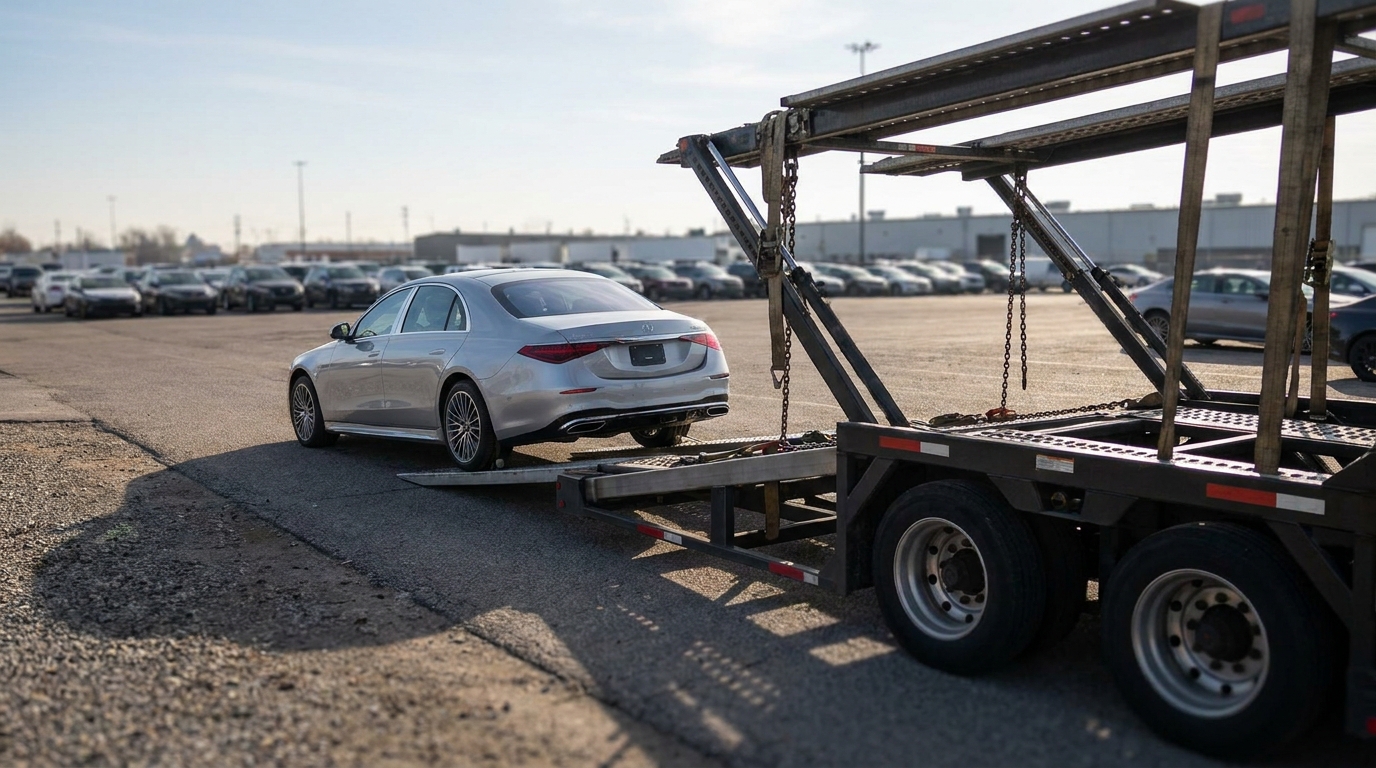
Standard auto transport is door to door, meaning the driver comes as close to your address as the truck can safely and legally get. A 75-foot rig cannot fit down a narrow residential street or under low branches, so you may agree to meet at a nearby wide spot like a large parking lot. That is normal and not a downgrade in service.
In transit
Your vehicle now travels with several others on the same trailer. Drivers cover roughly 300 to 500 miles a day once you account for legally required rest, fuel, and other stops on their route. A rough rule of thumb:
- Under 500 miles: 1 to 2 days
- 500 to 1,500 miles: 2 to 4 days
- 1,500 to 2,500 miles: 4 to 7 days
- Coast to coast: 7 to 9 days
Weather, mountain passes, and the driver's other stops all move these numbers. A reputable broker or carrier will give you a way to check status. You will not get airline-grade live tracking on most moves, and that is normal for the industry.
Delivery and the second inspection
At delivery you repeat the inspection, and this step matters just as much as the first. Before you sign anything and before the driver leaves, compare the car to your pickup photos and to the Bill of Lading. Check the panels, bumpers, wheels, and glass. If you find new damage, note it on the delivery paperwork before you sign and photograph it immediately. Signing a clean delivery report can waive your ability to claim later, so never sign off in the dark or in pouring rain without looking closely.
Most moves are paid partly at booking and partly at delivery, and the delivery balance is often cash or certified funds paid directly to the driver. Confirm the exact payment terms in writing when you book so there are no surprises on the driveway.
What insurance actually covers
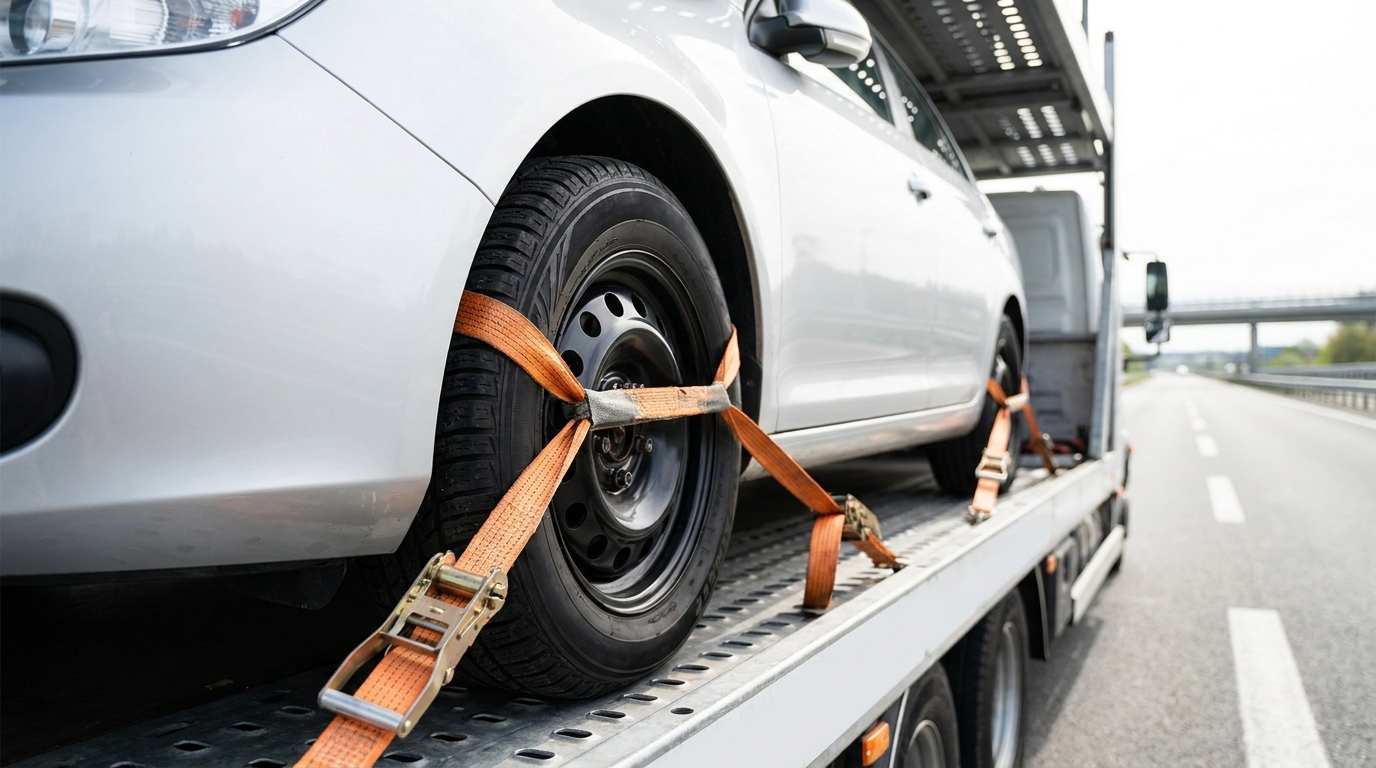
Every licensed carrier is required to carry cargo insurance, and your vehicle is covered by that policy while it is on their truck. Ask for the carrier's insurance certificate and confirm the coverage amount, especially for a high-value car. Note that carrier cargo insurance covers transport damage, not pre-existing wear or personal items left inside the vehicle. Many carriers ask you to empty the car for exactly that reason, and because loose items add weight and can shift.
Red flags worth memorizing
- A quote far below every other one. It is usually a lure, not a deal.
- Pressure to book immediately or pay a large deposit before a carrier is assigned.
- A company that will not tell you plainly whether it is a broker or a carrier.
- No physical address, no motor carrier or broker authority number, and no verifiable reviews.
- A demand for your phone number before anyone will show you a price. That is a lead-resale tell, not a quoting requirement.
The bottom line
Auto transport is not complicated once you see the shape of it. Someone finds you a truck, the truck picks up your car and documents its condition, it drives a few hundred miles a day, and it delivers to a second inspection. The skill is not in the shipping. It is in reading prices honestly, insisting on a thorough Bill of Lading, and refusing to be rushed by anyone who quotes a number that is too good to be real. Do those three things and the rest tends to take care of itself.
See real prices, no phone number required
We show named broker prices side by side, labeled by where each number came from. We never ask for your contact info to show you a quote.