
Open vs. Enclosed Auto Transport: How to Choose
Open carriers move most cars in America and cost far less. Enclosed trailers protect the ones that need it. Here is how to tell which category your vehicle falls into without overpaying.
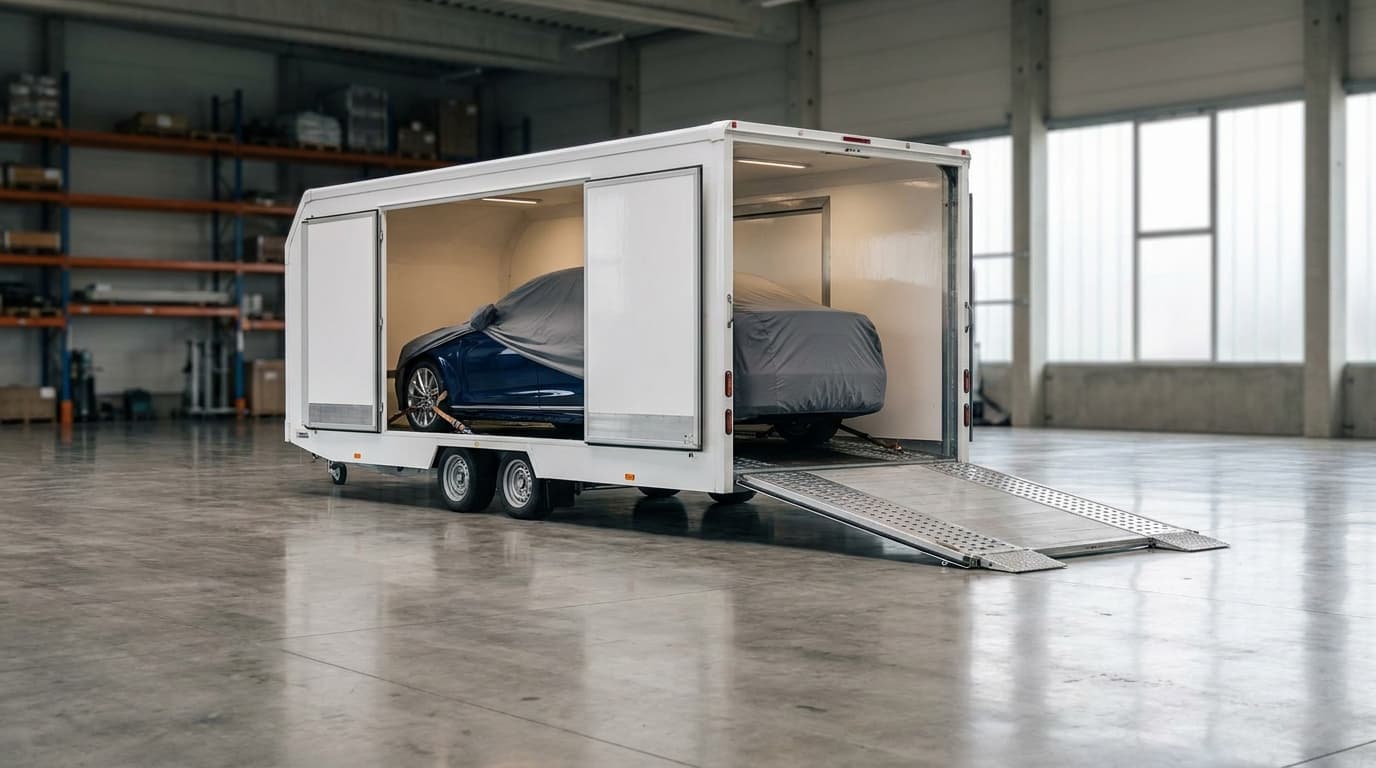
The first real decision you make when shipping a vehicle is not which company to hire. It is which type of trailer to put your car on. This choice sets your price, your protection level, and how quickly a driver picks the job up. Get it right and you avoid both overpaying for protection you do not need and underpaying for a car that deserved better. Here is everything that actually separates the two.
What open transport is
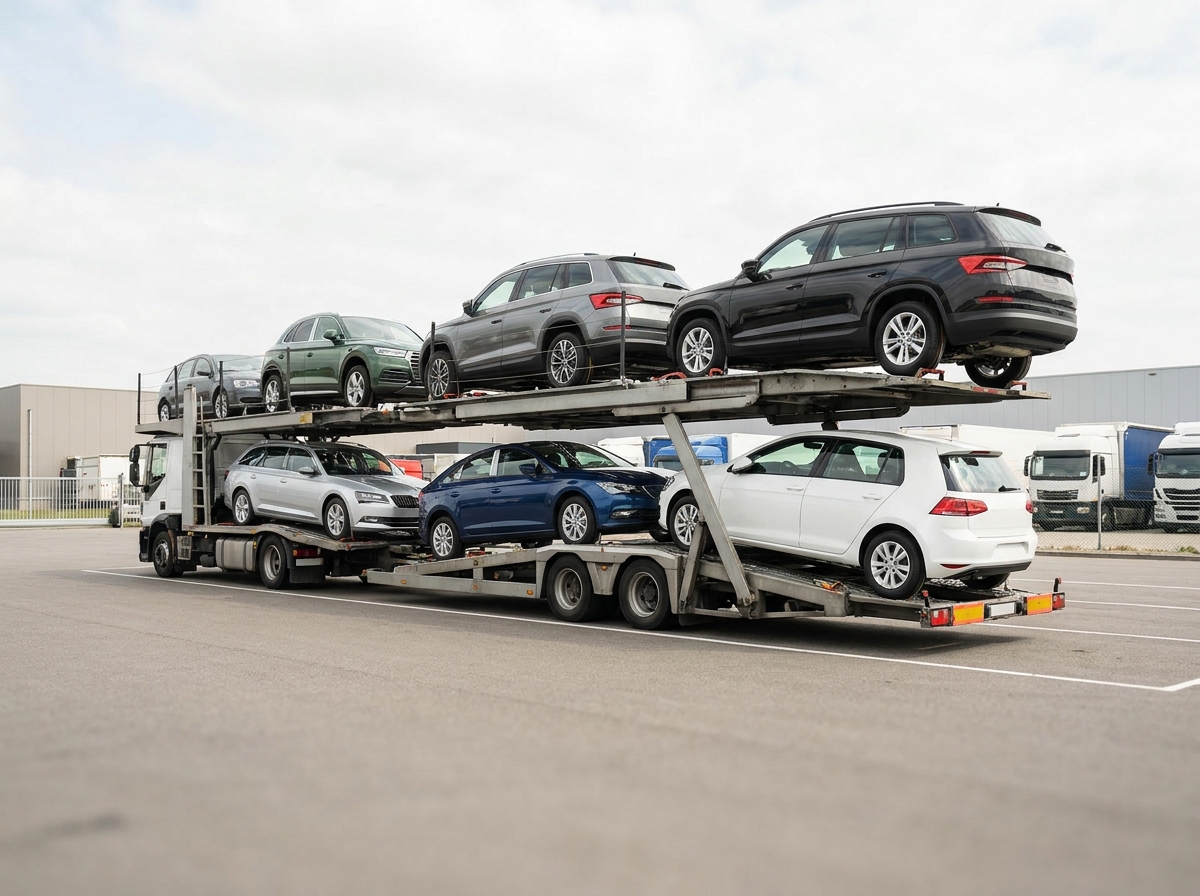
Open transport is the two-level, exposed car carrier you have seen a thousand times on the highway, stacked with anywhere from a handful to nine or ten vehicles. It is the default for a reason. Roughly nine out of ten cars shipped in the United States move this way, including nearly every new car delivered from the factory to the dealership.
The vehicles ride secured by their wheels or frame, fully exposed to the open air. That exposure is the entire tradeoff. Your car sees the same sun, rain, road grime, and dust it would see if you drove it yourself for a few days. For an ordinary daily driver, that is a complete non-issue.
Open transport is the right call when:
- You are shipping a standard car, truck, SUV, or minivan.
- You want the lowest reasonable price.
- You want the fastest pickup, since open carriers vastly outnumber enclosed ones.
- The vehicle is a daily driver, a commuter car, or a typical used-car purchase.
What enclosed transport is
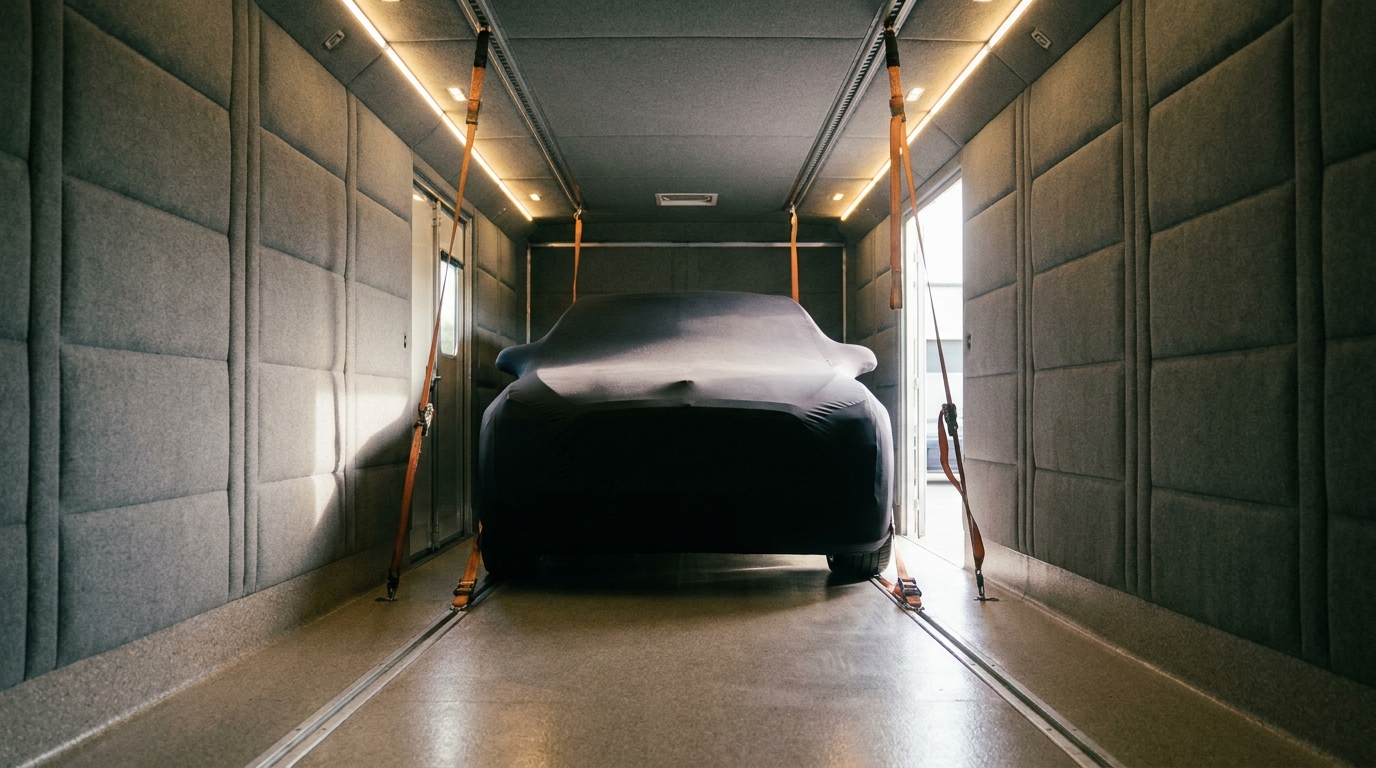
Enclosed transport puts your vehicle inside a fully covered trailer, the same kind used to move race cars, exotics, and museum pieces. No sun, no rain, no road debris, no prying eyes. Enclosed trailers typically carry fewer vehicles, often two to six, and many use soft straps and hydraulic liftgates instead of ramps to protect low ground clearance and delicate finishes.
You pay for that protection. Enclosed transport commonly runs somewhere in the range of 40 to 60 percent more than open transport on the same route, and sometimes more on premium white-glove service. Treat any specific percentage as a rough planning estimate, not a live quote, because the gap depends heavily on the route and the value of what you are moving.
Enclosed transport is worth it when:
- The car is a luxury, exotic, collector, or classic vehicle.
- It has a low ride height that risks scraping on standard ramps.
- It is a rare, irreplaceable, or high-value car where a stone chip is a real financial loss.
- The paint or finish is show quality, freshly restored, or a custom wrap.
- The move happens in winter, through road salt and harsh weather, for a vehicle you care deeply about.
The honest cost comparison
The price gap is real, but so is the value gap, so compare them the right way. Ask yourself what a repaint of a single panel, or a professional chip repair, would cost on your specific car. On a $12,000 used commuter, the answer is small relative to the fare, and open transport is the rational choice. On a $150,000 collector car with original paint, a single chip can cost you far more than the entire enclosed premium, and enclosed becomes the cheap insurance.
The mistake is applying a blanket rule in either direction. Paying enclosed prices to ship a beige commuter across three states is throwing money away. Saving a few hundred dollars on open transport for an irreplaceable classic is a gamble against odds you do not need to take.
What open transport does not mean
It is worth clearing up a common fear. Open transport does not mean careless transport. Your vehicle is professionally secured, and the exposure is genuinely mild. Cars are not damaged in transit at anything close to the rate people imagine, and the new car in your neighbor's driveway almost certainly arrived on an open carrier. The dust and road film a car might pick up washes off. The risk enclosed transport actually removes is the small chance of a stone chip or weather exposure, which matters enormously on a rare car and barely at all on a normal one.
Speed and availability
There is a practical dimension beyond protection. Because open carriers so heavily outnumber enclosed ones, open loads get picked up faster and can be scheduled on shorter notice. Enclosed capacity is thinner, so if you need enclosed service you should book with more lead time, especially around major auctions, shows, and the seasonal snowbird migrations that tie up premium trailers.
Top-load, single-car, and other upgrades
Within each category there are finer options that mostly matter for valuable vehicles:
- Top-load placement keeps your car on the upper deck of an open carrier, away from any fluid drips from vehicles above it. Some carriers offer it as an add-on.
- Single-car or two-car enclosed service means far fewer load and unload cycles around your vehicle, which reduces handling risk. It costs more than a fuller enclosed trailer.
- Liftgate loading replaces ramps with a hydraulic platform, essential for very low cars that would otherwise scrape.
None of these are necessary for a normal car. All of them can be sensible for a special one.
A simple decision rule
If you would not lose sleep over a stone chip or a rainy pickup, ship open and keep the difference. If the thought of a single mark on the paint makes you wince, or the car is genuinely irreplaceable, ship enclosed and treat the premium as insurance. Almost everyone shipping a normal vehicle should choose open transport without a second thought. The people who need enclosed usually already know exactly why.
When you compare prices on a route, make sure you are comparing the same trailer type across brokers. An open quote against an enclosed quote is not a real comparison, and knowing which one you actually need is how you avoid being upsold.
See real prices, no phone number required
We show named broker prices side by side, labeled by where each number came from. We never ask for your contact info to show you a quote.