
What to Do If Your Car Is Damaged in Transit
Transport damage is uncommon, but if it happens, what you do in the first few minutes at delivery decides whether your claim succeeds. Here is the exact step-by-step response, and how to file a claim that actually gets paid.
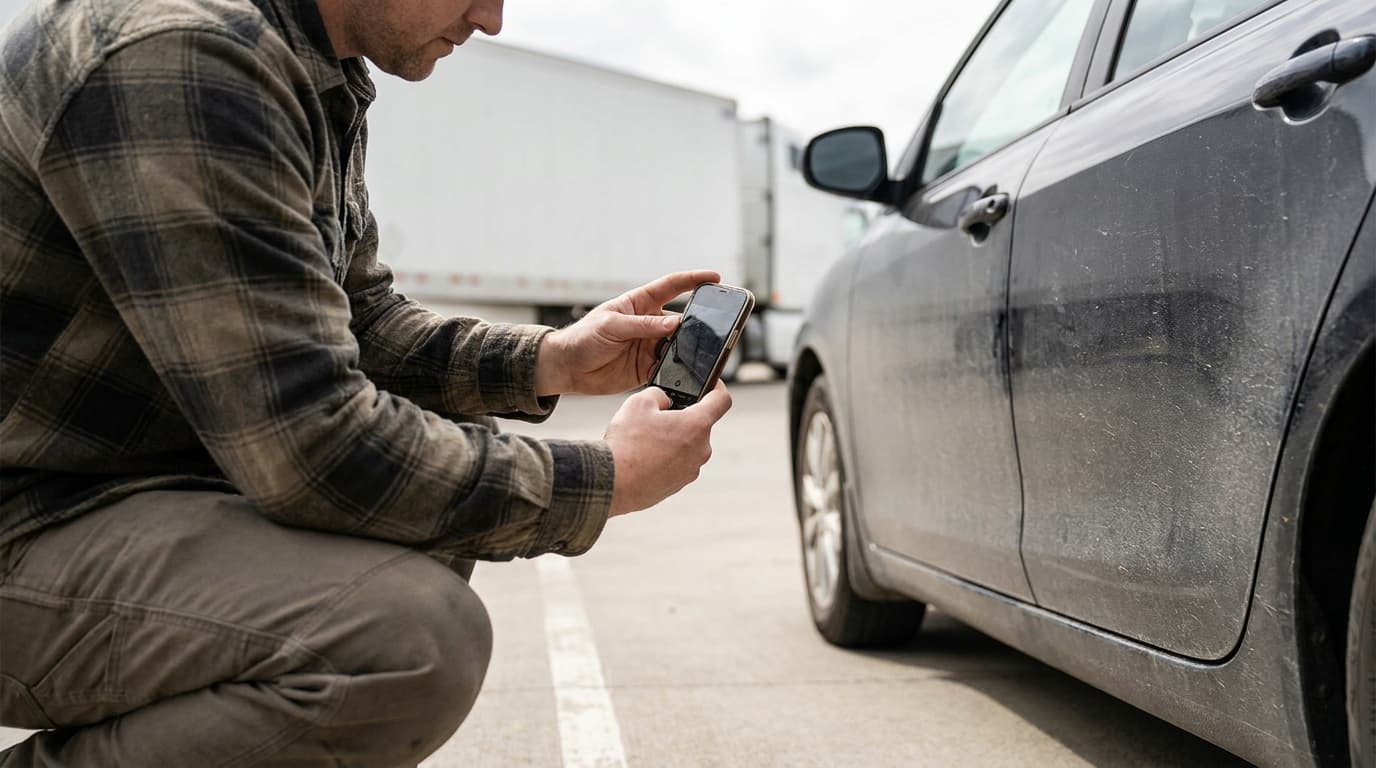
Damage in transit is uncommon. The overwhelming majority of car shipments arrive exactly as they left. But it does happen, and if it happens to you, the outcome is decided almost entirely by what you do in the first few minutes at delivery, before the driver leaves and before you sign. Get those minutes right and a claim is straightforward. Get them wrong, sign a clean report and wave the driver off, and even real damage becomes nearly impossible to recover. This is the guide you hope you never need, written so that if you do, you handle it perfectly.
The single rule that decides everything
Here it is, up front, because it matters more than anything else: inspect the car and note any damage on the delivery paperwork before you sign, while the driver is still there.
When you sign the delivery section of the Bill of Lading, you are certifying the car arrived in good condition. That signature is the carrier's proof that nothing was wrong. If you sign a clean report and then notice damage after the driver has gone, you have almost no case, because on paper the car arrived fine. Everything below flows from this one rule. See Understanding the Bill of Lading for how the document works.
At delivery: the step-by-step
Do this every time, even when you are tired, it is late, or the driver seems in a hurry:
- Inspect before you sign. Walk the entire car and compare it against your pickup photos and the pickup condition report. Check every panel, both bumpers, the wheels, the glass, and the roof. If the car is dirty from the road, wipe down or look closely at anything you are unsure about, because road film hides scratches. If it is dark, use a flashlight. Do not accept delivery in conditions where you genuinely cannot see the car.
- If you find new damage, note it on the delivery report before signing. Write it clearly on the Bill of Lading's delivery section. Be specific about what and where.
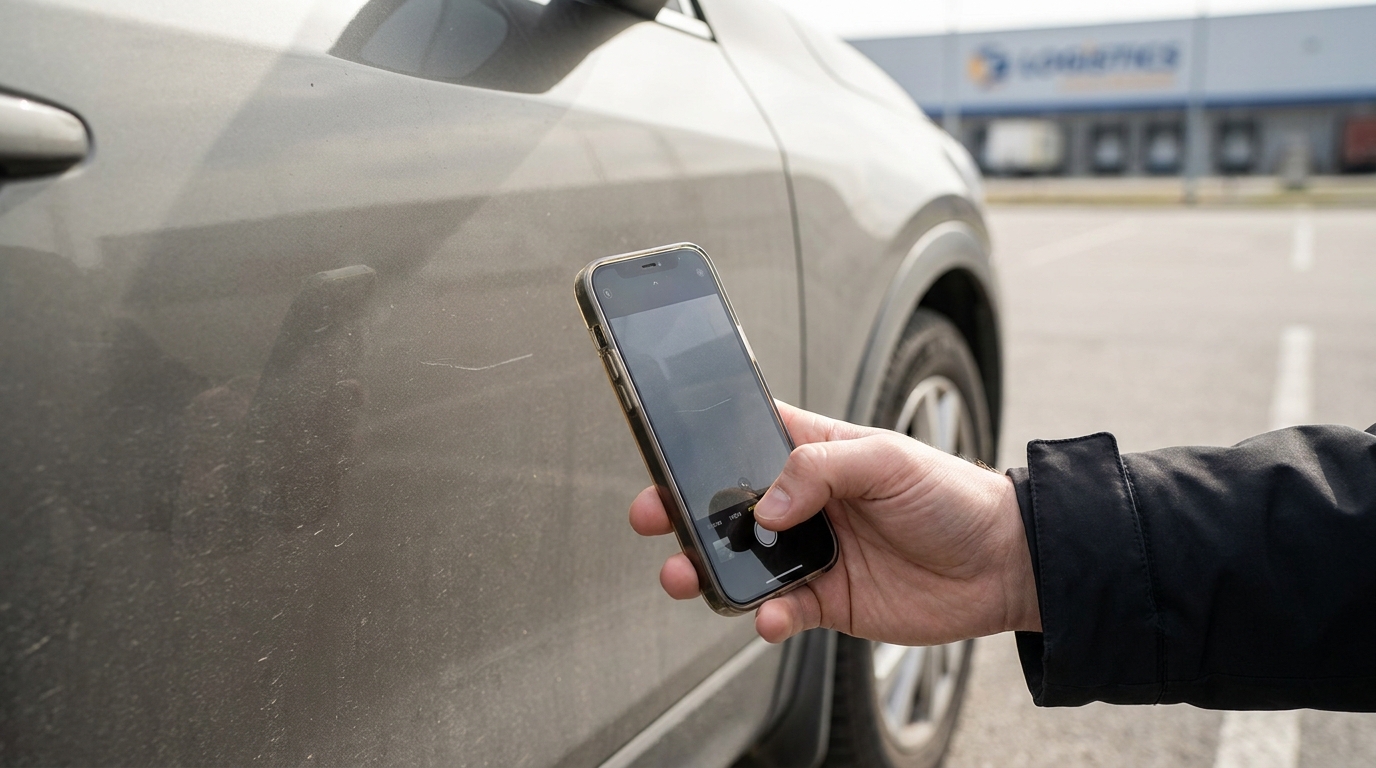
- Photograph the damage immediately, next to the car, before the driver leaves. Multiple angles, close and wide.
- Get the driver to acknowledge it on the document. Their acknowledgment on the paperwork strengthens your claim enormously.
- Do not sign a clean report. Only sign paperwork that reflects the damage you found. If the driver pressures you to sign quickly, that pressure is itself a reason to slow down.
Those five steps, done in the few minutes before the driver leaves, are what make a claim winnable.
What the insurance actually covers
Every licensed carrier carries cargo insurance that covers your vehicle for damage that happens in transit while it is in their care. That is what a transport damage claim draws on. It does not cover pre-existing damage, which is exactly why the pickup baseline matters, and it does not cover personal items left inside the car. Confirm the coverage details and amount fit your vehicle, ideally before you ever ship. The full picture is in Auto Transport Insurance Explained.
This is also why your before-and-after photos are so powerful. They prove the damage was not there at pickup and was there at delivery, which is the entire question a claim turns on.
How to file the claim
Once you have documented the damage at delivery, filing is methodical:
- Contact the carrier promptly to open a claim. If you booked through a broker, loop them in too, since a good broker will help push the claim on your behalf.
- Submit your evidence: the annotated delivery Bill of Lading with the damage noted and the driver's acknowledgment, your pickup baseline photos and report, and your delivery photos of the damage.
- Get repair estimates if asked, from a reputable shop, to document the cost.
- File within the claim window. Claims have deadlines, so act quickly rather than sitting on it. Delay is one of the most common reasons a valid claim runs into trouble.
- Keep copies of everything and a record of all communication.
A claim backed by clear before-and-after photos and a delivery report noting the damage is usually resolved without drama. The cases that go badly are almost always the ones with thin documentation.

If the claim is disputed
Most legitimate, well-documented claims are honored. If a carrier disputes or stalls a clearly documented claim, you have options. Escalate in writing, keep pressing with your evidence, and involve your broker if you used one. For unresolved disputes, you can file a complaint with the relevant federal transportation authority, and depending on the amounts involved, pursue other consumer remedies. This is far more likely to be necessary when documentation is weak, which is one more reason to get the delivery inspection right the first time.
The best claim is the one you never need
Prevention is worth more than any claim process. Choosing a reputable, properly insured carrier, confirming coverage before you ship, and creating a thorough pickup baseline all reduce both the chance of damage and the difficulty of proving it. Vet the company using the checklist in How to Avoid Car Shipping Scams, and prep and photograph the car per How to Prepare Your Car for Shipping.
The bottom line
Transport damage is rare, but your response is what determines the outcome, and it comes down to one rule: inspect before you sign, note any damage on the delivery paperwork, and photograph it while the driver is still there. Never sign a clean report you have not verified. From there, file promptly with your before-and-after photos and the noted delivery report, and a legitimate claim is usually paid without a fight. Handle the first few minutes at delivery correctly and you turn a bad surprise into a solvable problem.
See real prices, no phone number required
We show named broker prices side by side, labeled by where each number came from. We never ask for your contact info to show you a quote.