
How to Ship a Motorcycle: A Rider's Guide
Motorcycles ship differently from cars: they need crates or specialized racks, careful strapping, and their own prep. Here is how motorcycle transport works, what it costs, and how to protect your bike in transit.
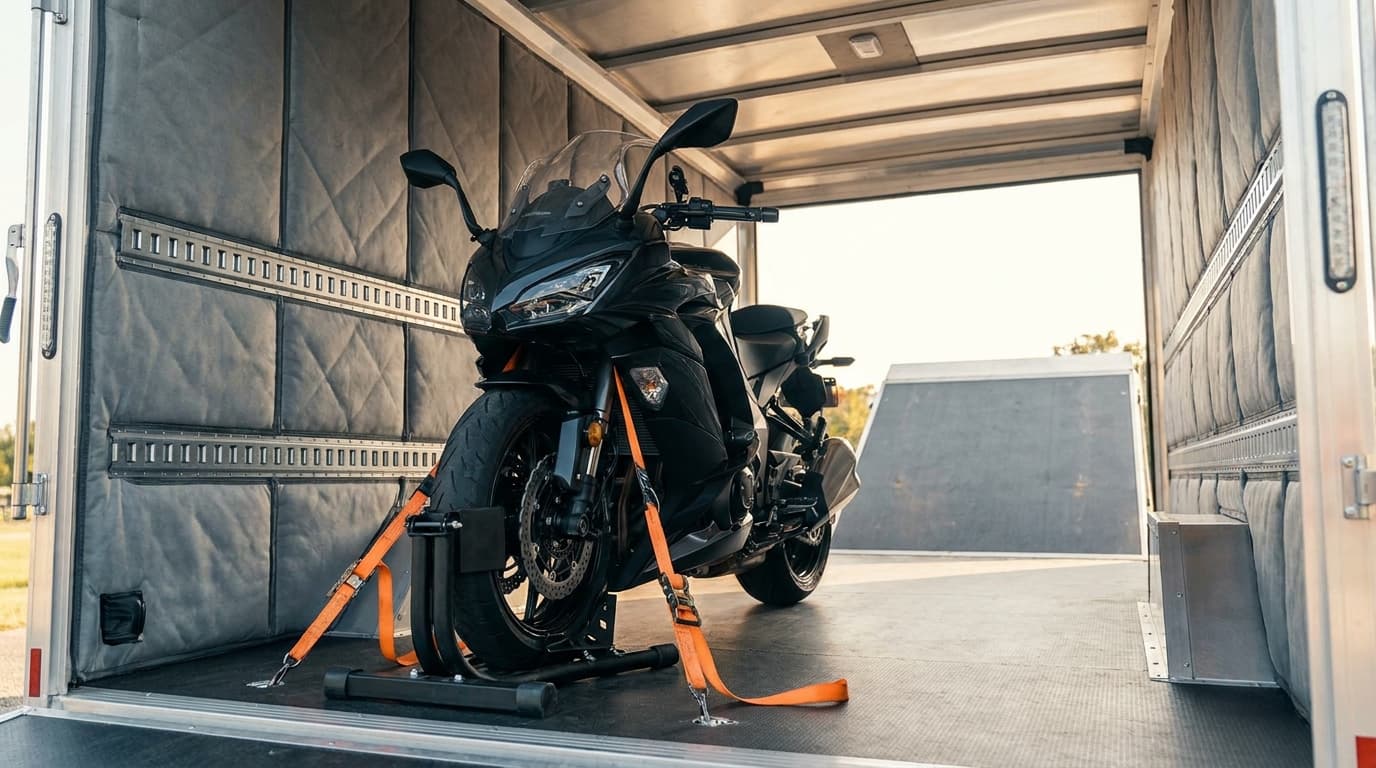
A motorcycle is not a small car, and shipping one is its own specialty. A bike has two wheels instead of four, no metal cage around it, and finish and components that are fully exposed, so it cannot just be parked on a car carrier and strapped down like a sedan. Done right, motorcycle transport is safe and straightforward. Done carelessly, a bike can tip, shift, or get scratched. Here is how to ship a motorcycle properly, whether it is a daily commuter or a prized collector bike.
How motorcycles actually ship
Unlike a car, a motorcycle needs to be held upright and stable for the entire trip, which is why bikes are almost always shipped by one of these methods:
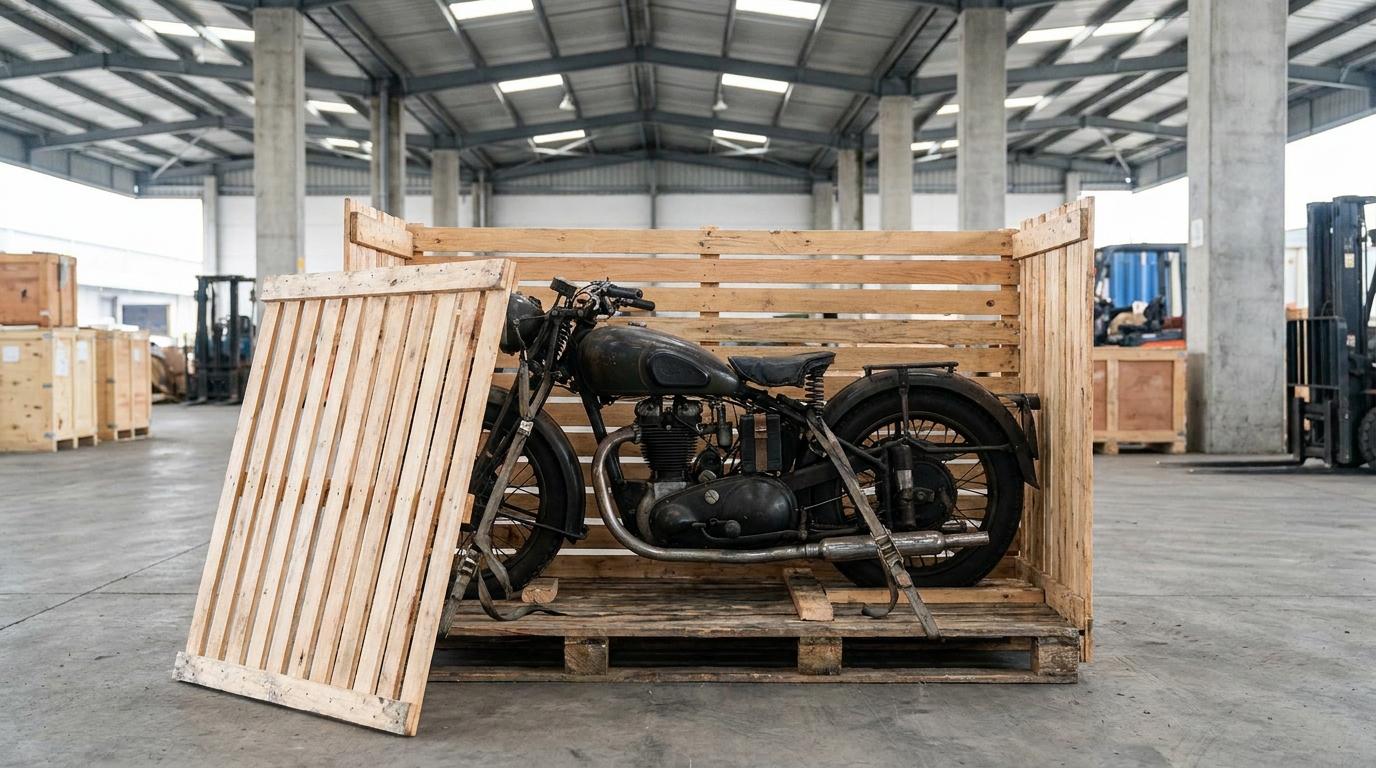
- Crated shipping. The bike is secured inside a wood or metal crate, often on a pallet, which fully protects it and makes it easy to handle. This is common for long-distance, freight-style, and international moves and offers strong protection.
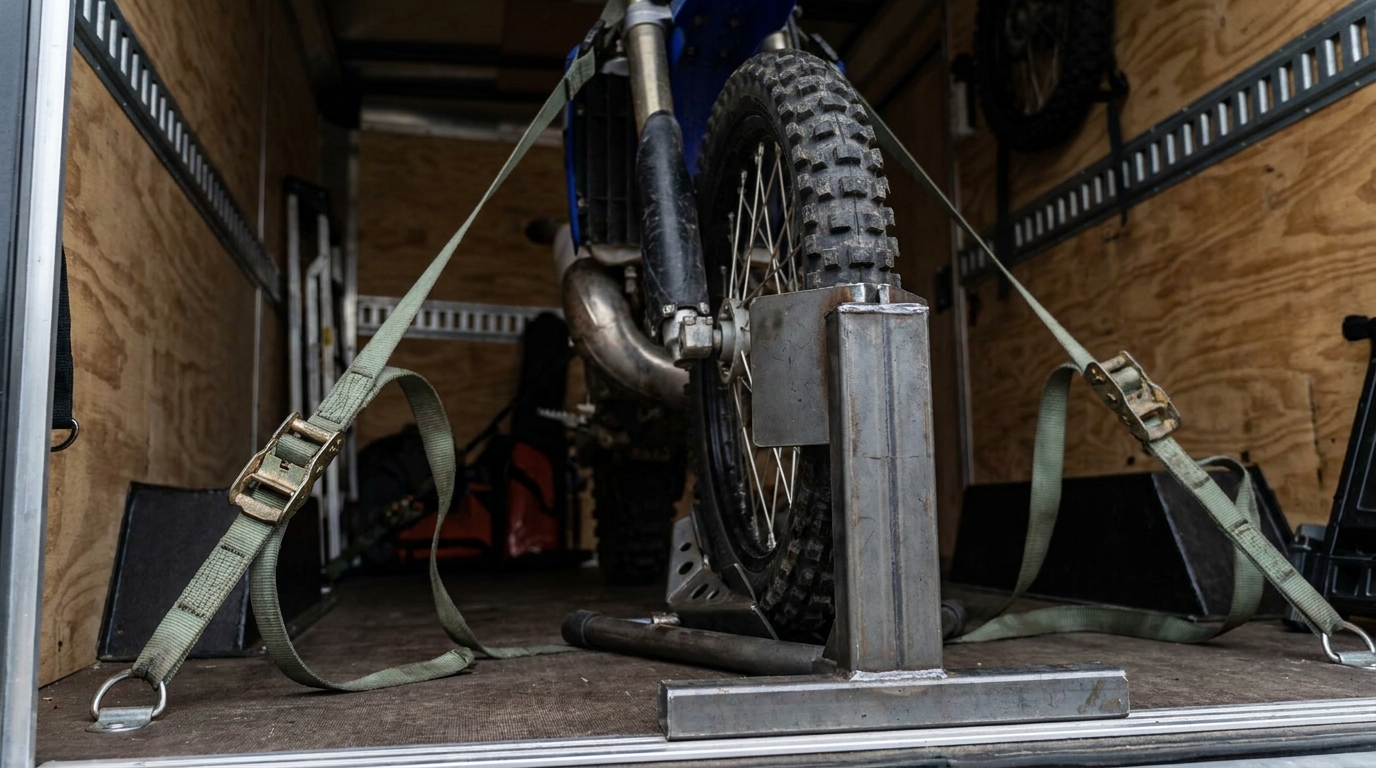
- Enclosed trailer with a bike rack or chocks. The motorcycle is loaded into an enclosed trailer, held upright in a wheel chock, and secured with soft straps. This is a common premium option and protects the bike from weather and road debris.
- Open transport on a specialized rack. Some carriers haul bikes on open trailers fitted with motorcycle racks. It is more economical but exposes the bike to the elements, much like open car transport.
For a valuable, custom, or collector motorcycle, crated or enclosed is the safer choice. For an everyday bike on a budget, a properly secured open option can be fine. The key in every case is that the bike is held upright and cannot shift.
What it costs
Motorcycle shipping generally costs less than shipping a car on the same route, since a bike is smaller and lighter, though the method changes the price. Crated and enclosed service costs more than a spot on an open motorcycle rack, and as with any move, distance, route popularity, and season all factor in. Treat any figure as a planning estimate rather than a live quote, and compare like for like: an open-rack quote and a crated quote are not the same product. The general price drivers in How Much Does It Cost to Ship a Car apply to bikes too.
Prep your motorcycle for transport
Good prep is what keeps a bike safe and prevents disputes. Before pickup:
- Clean the bike so existing scratches, chips, and scuffs are visible and can be documented.
- Photograph it thoroughly from every angle in good light, including close-ups of any existing damage and the odometer. This is your baseline for a claim.
- Reduce the fuel to a low level. You are not paying to ship gas, and less fuel is safer.
- Disable the alarm so it does not drain the battery or trip in transit.
- Fold in or secure mirrors and loose accessories. Remove anything that can rattle loose, like saddlebags, GPS units, or aftermarket add-ons, unless the carrier says to leave them.
- Note any leaks or quirks, and give the driver clear instructions if the bike has an unusual starting procedure or a kill switch.
- Check tire pressure, since the bike is secured partly by its wheels and low tires complicate loading.
The general prep logic in How to Prepare Your Car for Shipping carries over, adjusted for two wheels.
Insurance and documentation
Confirm the carrier's cargo insurance covers your motorcycle and that the coverage amount reflects the bike's value, which matters especially for a custom or collector machine. As with cars, personal items and pre-existing damage are not covered, and the documentation is what makes any claim work. Make sure the condition is recorded on the Bill of Lading at pickup, and inspect the bike against your photos at delivery before you sign, because a clean signature can waive a claim. See Auto Transport Insurance Explained and Understanding the Bill of Lading.
For a non-running bike, disclose it up front, since loading a bike that will not roll or start changes the handling, similar to shipping a non-running car.
Choose a carrier that ships bikes regularly
Not every auto carrier is equipped or experienced with motorcycles. Look for a company that lists motorcycle transport as a real service, uses proper chocks, soft straps, and crating rather than improvising, and can explain exactly how your bike will be secured. Ask how the bike is held upright, what happens if it shares space with other vehicles, and what the insurance limit is. Vague answers about a two-wheeled vehicle are a reason to keep looking. The vetting checklist in How to Avoid Car Shipping Scams applies here too.
The bottom line
Shipping a motorcycle comes down to one core requirement: the bike must be held upright and completely stable for the whole trip, whether crated, chocked in an enclosed trailer, or secured on an open rack. Match the method to the bike's value, prep and photograph it carefully, confirm insurance that fits what the bike is worth, and choose a carrier that ships motorcycles as a genuine specialty rather than an afterthought. Handle those and your bike arrives standing exactly as it left.
See real prices, no phone number required
We show named broker prices side by side, labeled by where each number came from. We never ask for your contact info to show you a quote.