
How to Ship a Classic or Collector Car
A classic or collector car is not just cargo, it is an investment with paint you cannot replace. Here is how to ship one safely: enclosed transport, proper valuation, soft-strap loading, and the prep that protects a rare vehicle.
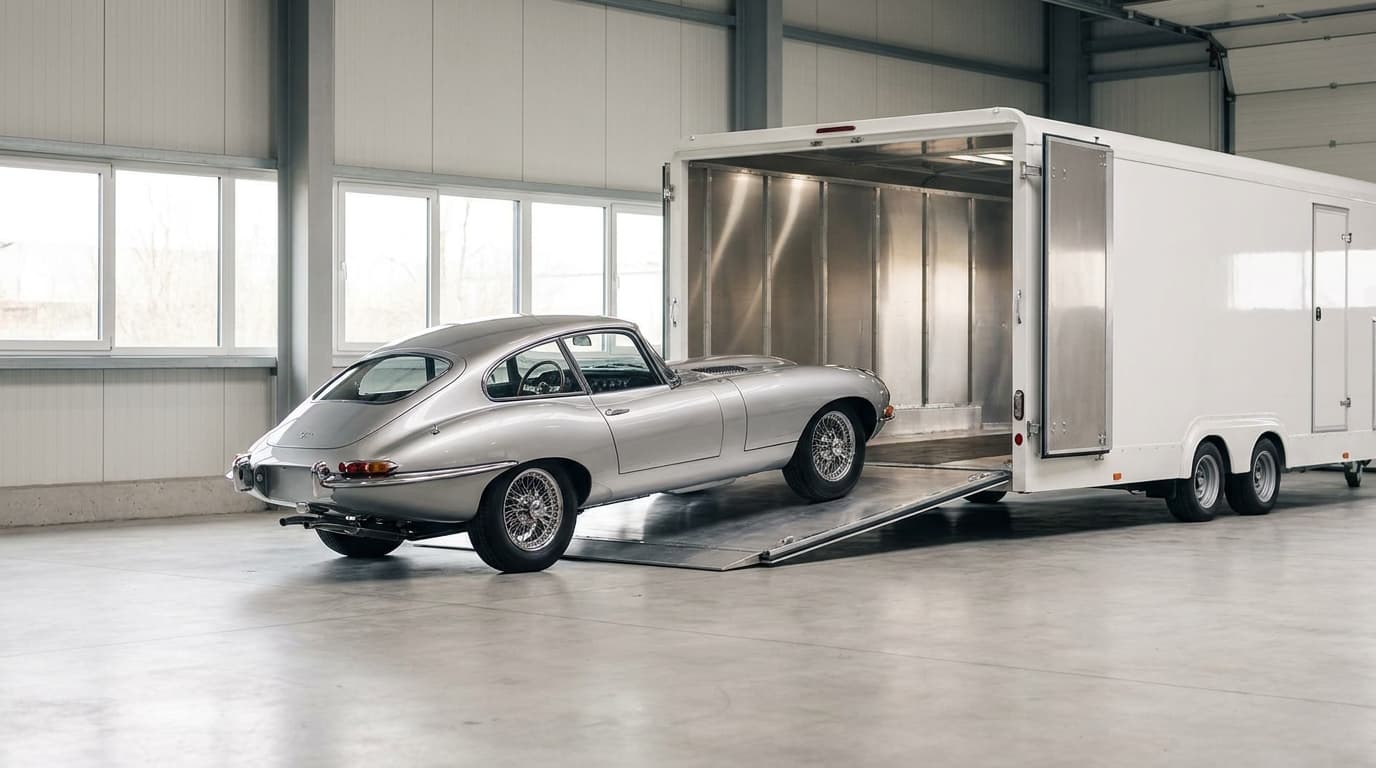
Shipping a classic or collector car is a different kind of stress than shipping a daily driver. The car may be irreplaceable, the paint may be worth more than an entire economy sedan, and a single stone chip can be a real financial loss rather than a minor annoyance. The good news is that the specialty exists precisely for cars like yours, and done right, moving a collector car is safe and routine. The mistakes almost always come from treating a rare car like an ordinary one. Here is how to do it properly.
Enclosed transport is not optional here
For a normal car, open versus enclosed is a genuine cost-benefit decision. For a genuine classic or collector car, it is not really a decision at all. Enclosed transport shields the vehicle completely from road debris, weather, sun, and prying eyes, and for a car whose value lives in its finish and originality, that protection is cheap insurance against a loss that could dwarf the entire fare.
Think about it in terms of downside. On a $15,000 driver, a chip repair is small relative to the fare, so open transport is rational. On a car with original paint worth six figures, a single chip can cost more than the entire enclosed premium many times over. The math almost always favors enclosed for a collector car. We lay out the full comparison in Open vs. Enclosed Auto Transport, but for a rare vehicle, start from enclosed and only reconsider if the car is a rough project where cosmetics genuinely do not matter.
Ask for the right loading equipment
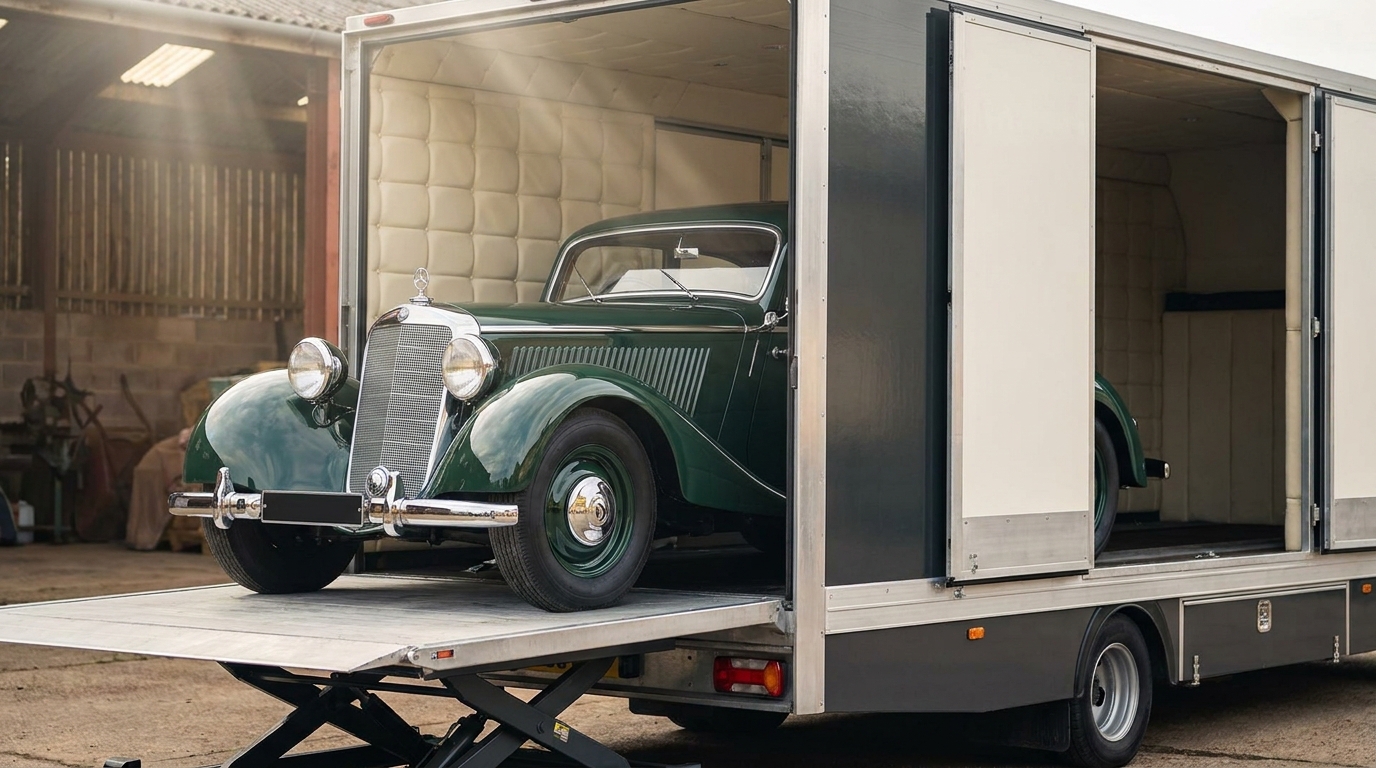
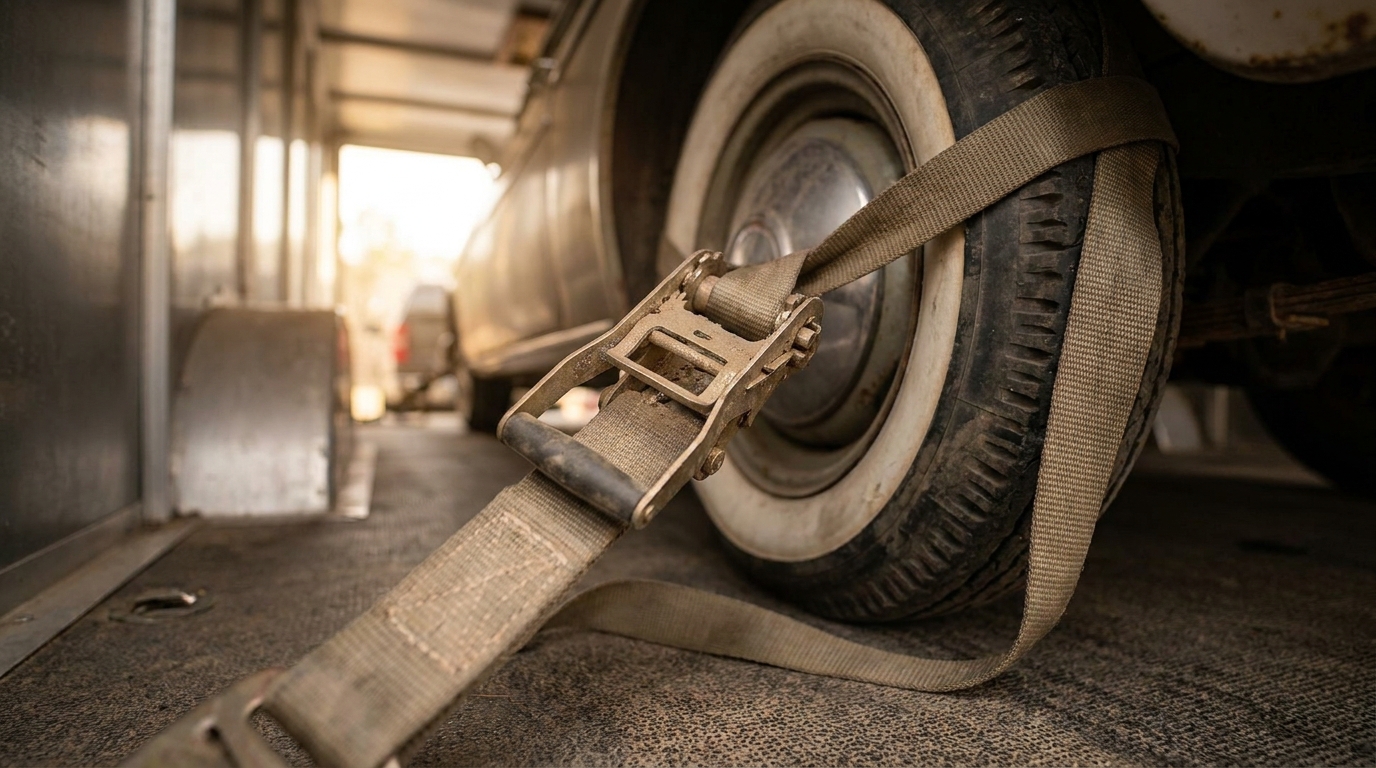
Many classics and nearly all lowered or low-clearance cars cannot safely climb standard ramps without scraping. For these, insist on a liftgate, the hydraulic platform that raises the car onto the deck with no steep angle, and soft straps that secure the car by the wheels or tires rather than hooking the frame or suspension. Hard chains on a delicate chassis are how damage happens.
When you book, specifically confirm liftgate loading and soft-strap tie-downs for a low or valuable car. A carrier who specializes in collector vehicles will already work this way. A generalist may not, which is exactly why matching the equipment to the car in advance matters. If the car has very low ground clearance, say so plainly and get written confirmation the equipment fits.
Single-car or low-count transport reduces handling
Within enclosed service, you can often pay for fewer vehicles sharing the trailer. A single-car or two-car enclosed move means far fewer load and unload cycles happening around your car, which reduces the handling risk that comes with a packed trailer. For an ordinary enclosed shipment this is unnecessary, but for a top-tier collector car it can be worth the premium. Ask what your options are and price the difference.
Get the valuation and insurance right
This is where collector car owners get caught, so treat it carefully. Standard carrier cargo insurance is often sized around ordinary vehicles, and its per-vehicle coverage may fall far short of what your car is actually worth. A policy built around $20,000 cars does not protect a $200,000 one.
Before you ship:
- Confirm the carrier's cargo coverage amount and whether it genuinely covers your car's full value. Do not assume.
- Ask about additional or supplemental coverage for high-value vehicles, which specialty carriers often offer.
- Have documentation of the car's value ready, such as an appraisal, recent comparable sales, or insurance agreed-value paperwork. If a claim ever happens, proving what the car was worth is your job.
- Check whether your own collector car insurance provides any transport coverage as a secondary layer.
We cover the mechanics in Auto Transport Insurance Explained, but the collector-car version of the rule is simpler: never let the coverage amount be a mystery on a car this valuable.
Document the car obsessively
For any car, thorough photos matter. For a collector car, they matter more, because the flaws that constitute a claim are smaller and the stakes are higher. Before pickup, photograph the entire car in good light: every panel, the paint from multiple angles to catch reflections, the wheels, the interior, the engine bay, the undercarriage if accessible, and any existing imperfection up close. Note the odometer.
Then make sure the Bill of Lading and its condition report reflect that baseline accurately, and do the walkaround with the driver. At delivery, inspect against your photos before you sign anything, because a clean signature can waive your ability to claim. See Understanding the Bill of Lading for the full routine, and How to Prepare Your Car for Shipping for prep.
Prep specific to classics
Older and collector cars have quirks a driver needs to know about:
- Fluid leaks. Many classics weep oil or coolant. Disclose it so it can be planned for, especially since enclosed decks are shared.
- Quirky starting and controls. If the car has a choke, a battery cutoff, a hidden kill switch, or an unusual ignition procedure, write down clear instructions for the driver, or arrange to be present at both ends.
- Low fuel. A quarter tank or less. You are not paying to haul gas, and less fuel is safer.
- Fragile or removable parts. Secure or note anything delicate. Fold mirrors, and mention soft tops, delicate trim, or aftermarket aero.
- Battery and tires. A car that has been sitting may have a weak battery or flat-spotted tires. Make sure it can be moved cleanly for loading, or disclose that it cannot. If it does not run or roll, that changes the equipment, see How to Ship a Non-Running Car.
Choose a carrier that actually specializes
Not every carrier is set up for collector cars, and the ones that are will show it in how they talk to you. Look for a company that offers enclosed service as a core product, uses liftgates and soft straps, carries higher cargo coverage, and can speak fluently about handling low or valuable vehicles. Ask how many cars share the trailer, what the insurance limit is, and how they load a low car. Vague answers on a valuable vehicle are a reason to keep looking. The general vetting checklist in Broker vs. Carrier applies, with the bar set higher.
The bottom line
A collector car ships safely when you treat it as what it is: a valuable, irreplaceable asset that deserves enclosed transport, proper loading equipment, coverage that matches its real value, and obsessive documentation. Start from enclosed, insist on liftgate and soft-strap loading for anything low, confirm the insurance actually covers the car, photograph everything, and choose a carrier that specializes rather than dabbles. Do that and your classic arrives exactly as it left, which on a car like this is the only acceptable outcome.
See real prices, no phone number required
We show named broker prices side by side, labeled by where each number came from. We never ask for your contact info to show you a quote.