
How to Ship an Electric Vehicle (EV)
Electric vehicles ship much like gas cars, with a few real differences: extra weight, battery charge level, and low ground clearance. Here is what actually changes when you ship an EV, and what does not.
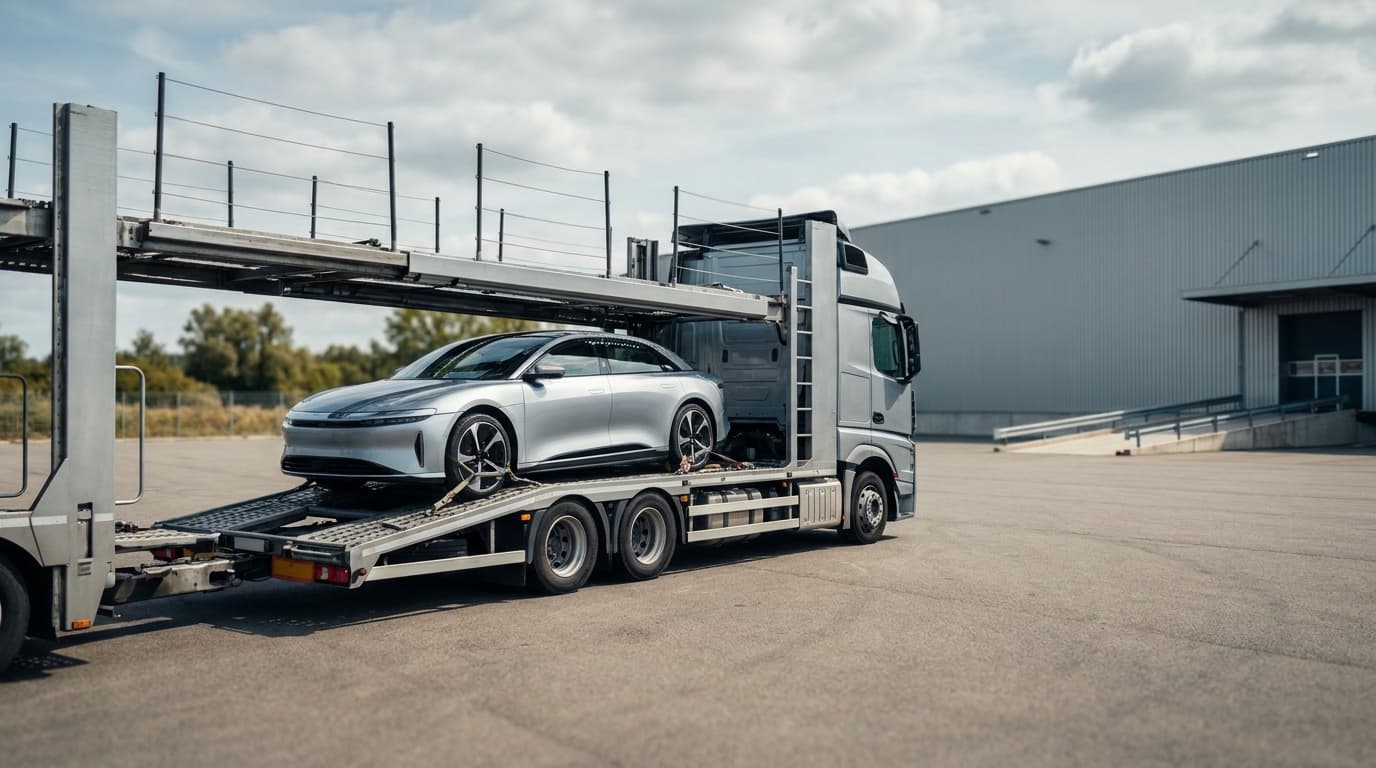
Shipping an electric vehicle is mostly the same as shipping any car, which is the first thing to know if you are anxious about it. It goes on the same carriers, follows the same booking and inspection process, and is insured the same way. But there are a few genuine differences worth understanding, mostly around weight, battery charge, and ground clearance. Get those right and an EV ships as easily as anything else. Here is what actually changes.
What is the same
Let us clear this up first, because the differences are smaller than people expect. An EV loads onto standard open or enclosed carriers, is secured by its wheels like any car, travels the same routes at the same daily mileage, and is documented on the same Bill of Lading. The choice between open and enclosed follows the same logic as for any vehicle: open for a normal EV, enclosed for a high-value or exotic one. See Open vs. Enclosed Auto Transport. The pickup, transit, and delivery process is identical to what we describe in How Car Shipping Works.
Difference one: weight
EVs are heavier than comparable gas cars, sometimes significantly, because of the battery pack. A midsize electric SUV can outweigh its gas equivalent by hundreds of pounds, and large electric trucks are heavier still. This matters because carriers manage the total weight on their trailer against strict federal limits, so a heavy EV takes up more of that weight budget.
In practice this can mean a slightly higher price and, occasionally, a carrier needing to balance their load around your vehicle. It is not a problem, but it is a reason to accurately state your exact make and model when you request a quote, so the price reflects the real vehicle. Do not describe a heavy electric truck as a generic "SUV," because the weight difference is real.
Difference two: battery charge level
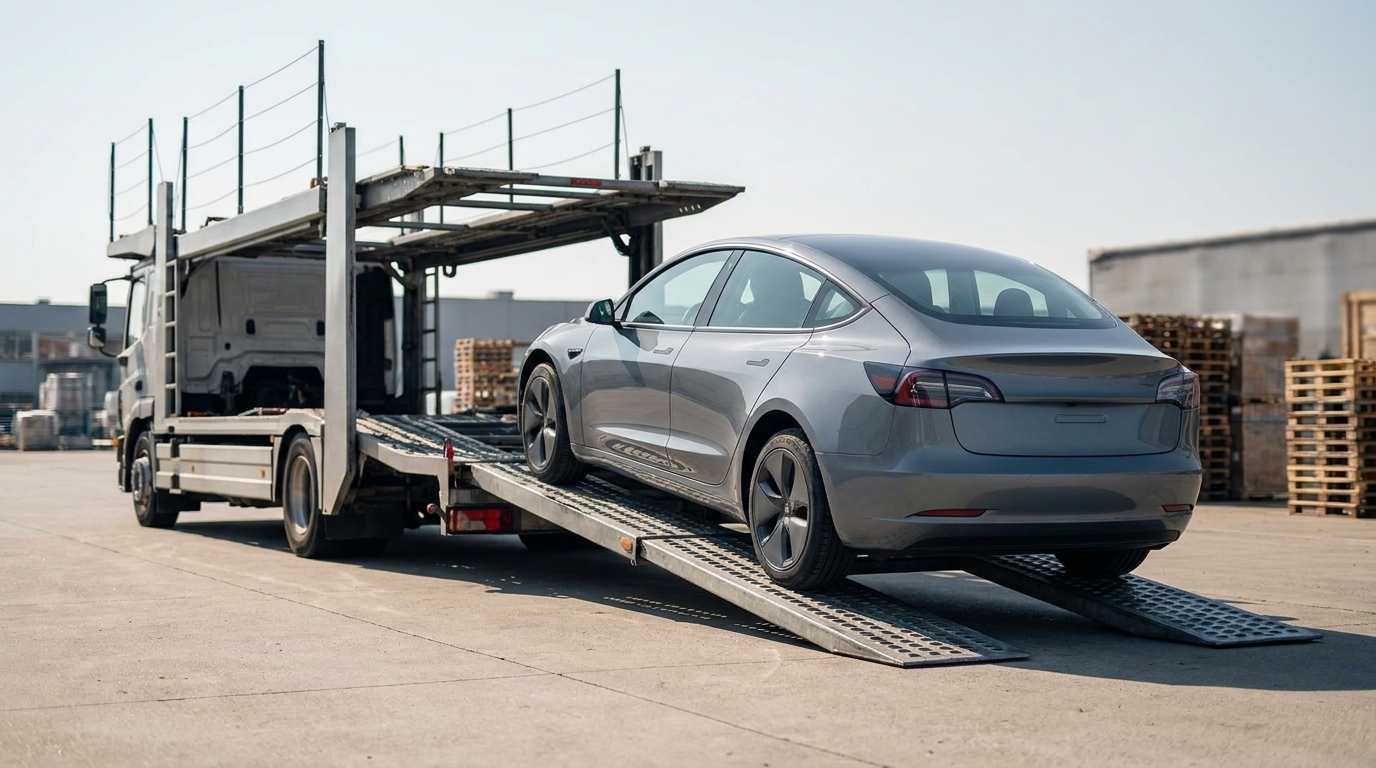
Your EV needs enough charge to be driven on and off the trailer and repositioned during loading and unloading, but it does not need to be full. A moderate charge, roughly in the range of a quarter to half the battery, is the sweet spot. Enough to maneuver reliably at both ends, without the wasted weight and unnecessary range of a full pack.
Just as importantly, do not ship an EV nearly empty. A car that runs out of charge on the trailer becomes an inoperable vehicle that cannot be driven off, which turns a routine delivery into a winch-and-special-equipment situation, similar to shipping a non-running car. Confirm the charge is at a comfortable middle level before pickup, and mention it to the carrier so everyone is on the same page.
Difference three: ground clearance and loading
Many EVs sit low and have flat underbodies with the battery pack mounted beneath the floor. On some models this means limited ground clearance, which can be a concern on steep standard ramps. If your EV is low, mention it when booking and ask about liftgate loading, the hydraulic platform that raises the car onto the deck without a steep ramp angle, and soft straps that secure the car by the wheels. This is the same care you would take with any low car, and it protects the underbody and the battery enclosure.
Difference four: handling and instructions
EVs have quirks a driver should know about. Many have no traditional key, using a card or phone, and some have unusual procedures to enter a neutral or transport mode for loading. One-pedal driving and regenerative braking behave differently than a gas car. Before pickup, make sure the driver has what they need to move the car: the access card or key, and clear instructions for putting it in neutral or transport mode if required. If the procedure is unusual, write it down or arrange to be present at both ends.
Insurance and value
An EV is often a higher-value vehicle, so confirm the carrier's cargo coverage amount actually reflects what your car is worth, the same rule that applies to any valuable vehicle. The battery pack in particular represents a large share of the car's value. Verify coverage before pickup, photograph the car thoroughly, and inspect against those photos at delivery before signing. See Auto Transport Insurance Explained. Standard prep otherwise follows the usual routine in How to Prepare Your Car for Shipping, with the charge level standing in for the fuel-level step.
The bottom line
Shipping an EV is not a special ordeal, it is an ordinary car shipment with a few adjustments. State the exact make and model so the price reflects the real weight, ship it with a moderate battery charge rather than full or empty, flag low ground clearance and ask about liftgate loading, and give the driver the access and neutral-mode instructions they need. Confirm the coverage matches the car's value and document everything as usual. Handle those and your electric vehicle arrives just as smoothly as any gas car would.
See real prices, no phone number required
We show named broker prices side by side, labeled by where each number came from. We never ask for your contact info to show you a quote.