
Shipping a Car in Winter: What to Know Before the Cold Hits
Winter shipping can be cheaper on many routes, but cold, snow, and road salt add real considerations. Here is how to prep your car, plan for weather delays, and decide whether to pay for enclosed transport.
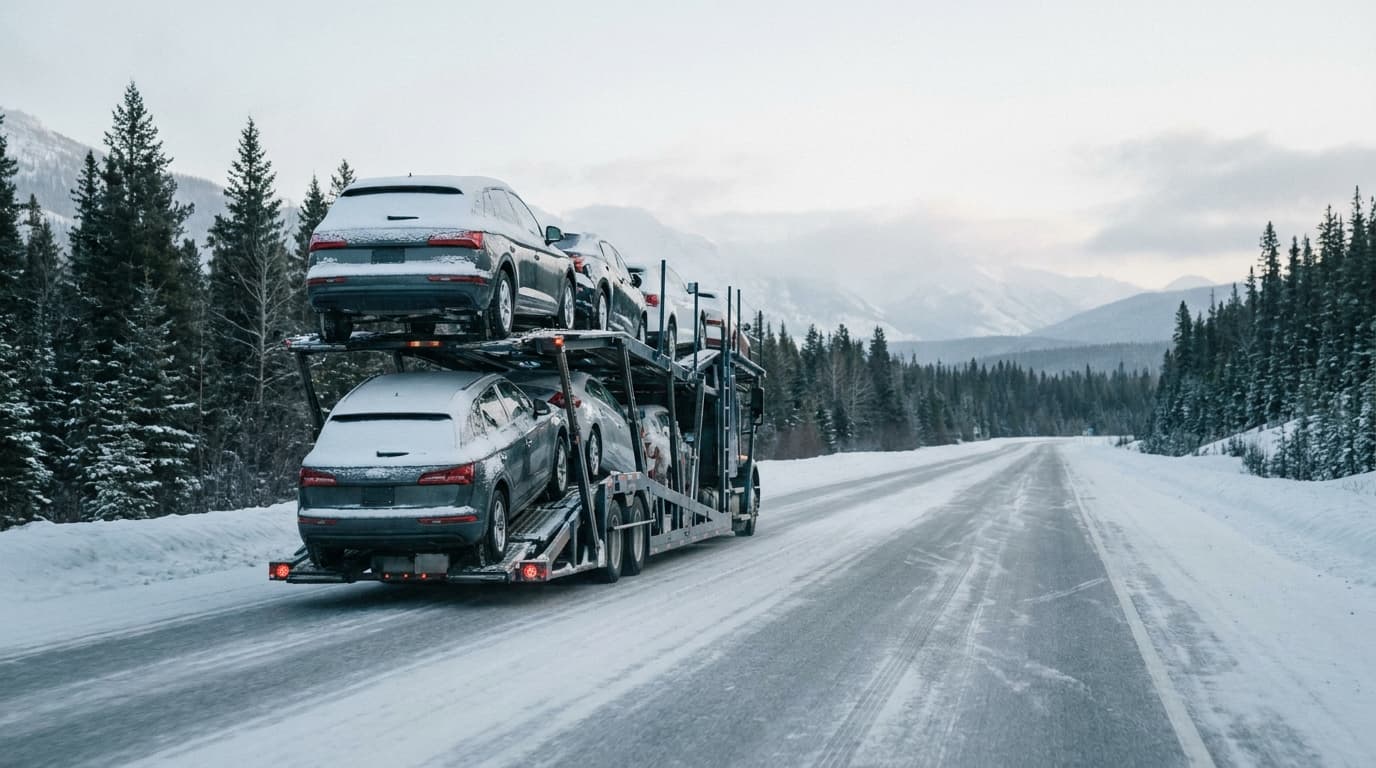
Winter is a genuinely good time to ship a car on many routes, often cheaper and sometimes faster to pick up, because overall demand softens outside the summer peak. But the season adds real considerations that warmer months do not: freezing temperatures, snow and ice delays, and road salt that eats at a car's finish and undercarriage. None of it should stop you from shipping in winter, but a little preparation makes the difference between a smooth cold-weather move and an avoidable headache. Here is what to know.
The upside: winter is often cheaper
On most lanes, winter demand drops after the holidays, which tends to soften prices and can mean quicker pickups than the crowded summer season. If your route is a normal one and you have flexibility, winter can be a value window. The big exception is the snowbird migration: the routes into Florida, Arizona, and Texas run the opposite way in winter, so those southbound lanes are peak, not off-peak. If you are shipping to the Sun Belt in winter, you are in high season on that route. See Snowbird Car Shipping and Best Time of Year to Ship a Car.
Plan for weather delays
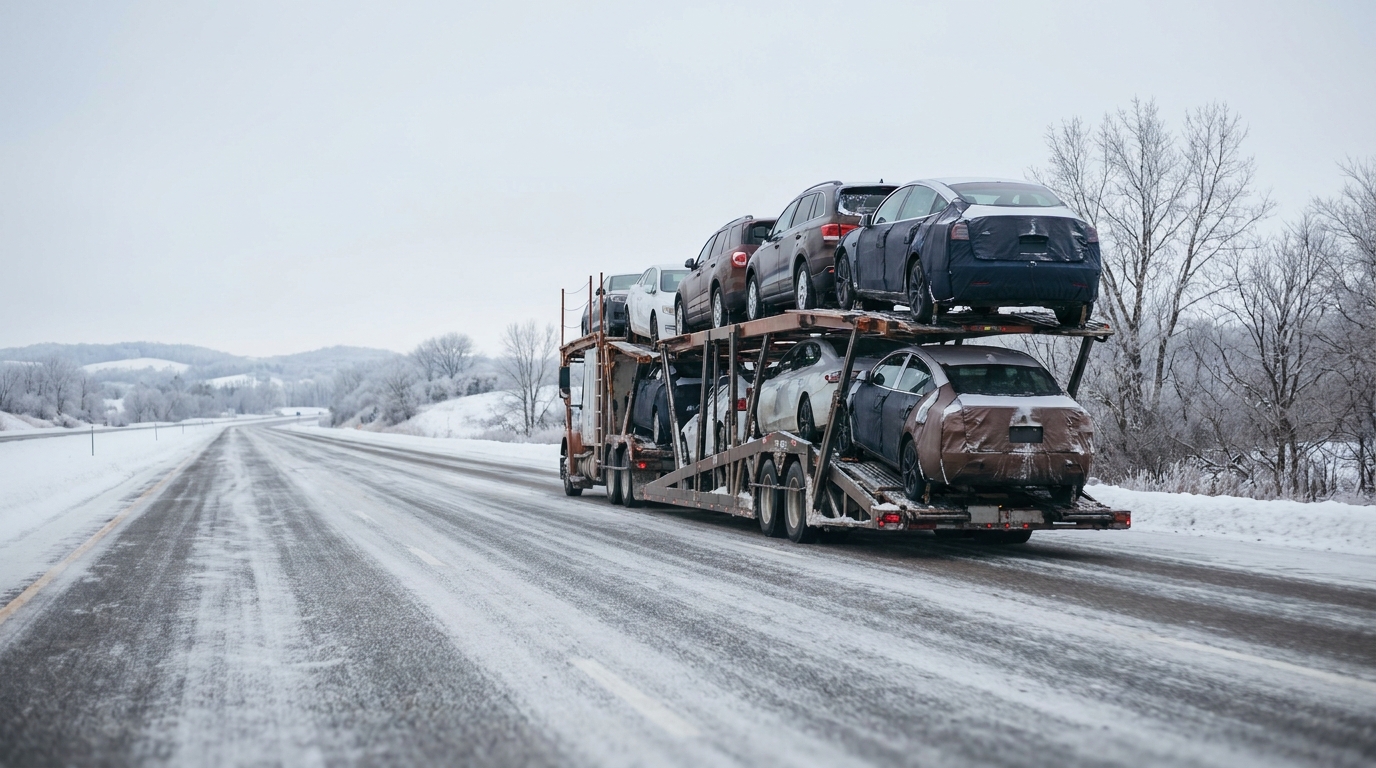
The single biggest winter difference is unpredictability. Snowstorms, ice, and closed mountain passes can slow or reroute a shipment, and none of it is the carrier's fault. A move that would take a few days in summer might face weather delays in January, especially on northern and cross-country routes. The fix is simple: build a buffer into your timeline and do not plan to be stranded if the car arrives a day or two late. See How Long Does It Take to Ship a Car. Stay in contact with the carrier for status during active weather, and be flexible on exact pickup and delivery timing, which also helps your price.
Road salt and the enclosed question
Winter roads are treated with salt and brine, which is hard on a car's paint, trim, and undercarriage over a long haul on an open carrier. For a normal daily driver, this is a minor concern, the car would see the same salt if you drove it, and it washes off. But for a valuable, classic, or freshly restored vehicle, winter is one of the strongest reasons to choose enclosed transport, which shields the car completely from salt spray and weather. If you would wince at salt film and grime on your car after a snowy multi-state trip, pay for enclosed. If it is an everyday vehicle, open is fine and you save the premium. See Open vs. Enclosed Auto Transport.
Winter prep for your car
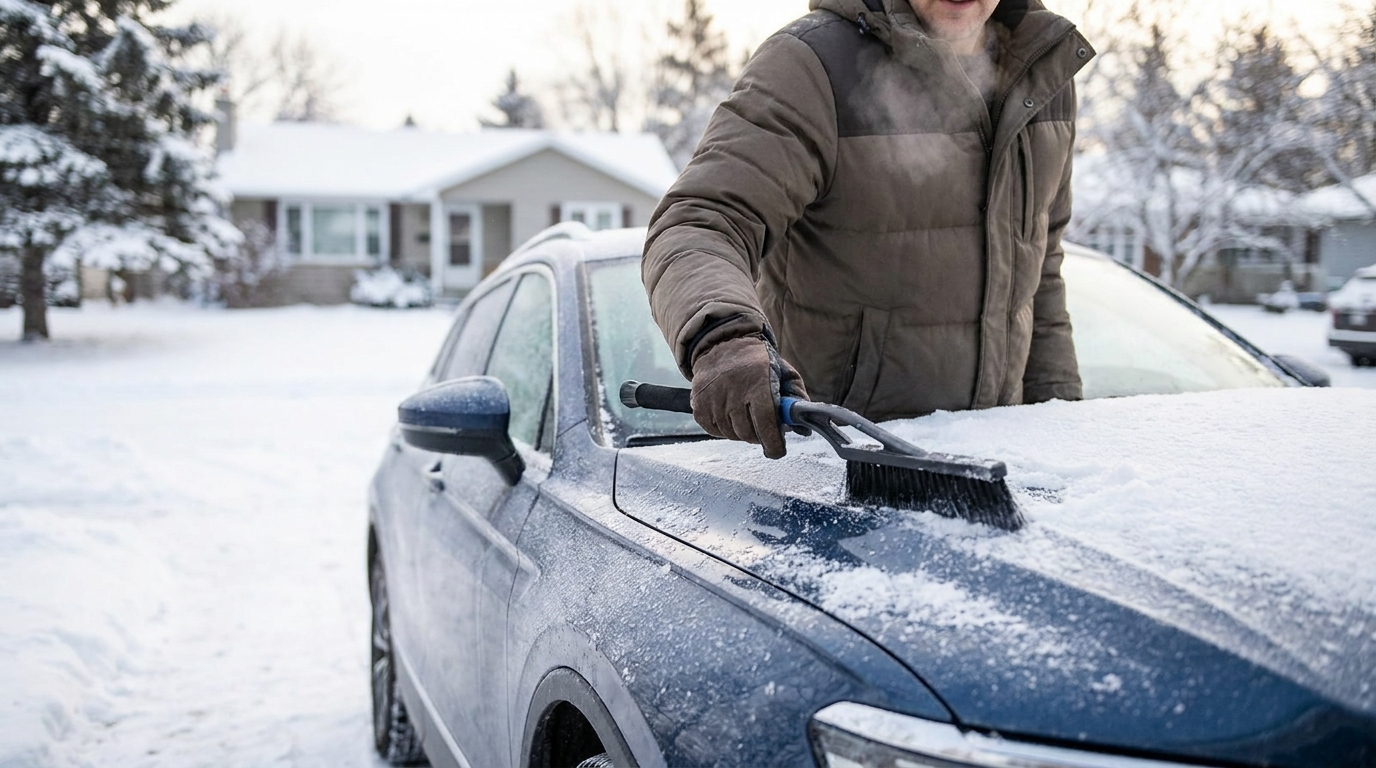
Cold weather adds a few steps to the standard prep routine. Before pickup:
- Check the battery. Cold saps battery power, and a weak battery may not start the car for loading. A car that will not start becomes an inoperable move needing special equipment, so make sure it starts reliably or disclose that it does not. See How to Ship a Non-Running Car.
- Confirm proper antifreeze and fluid levels, so nothing freezes during a cold trip.
- Set tire pressure correctly, since cold air lowers tire pressure and the car is secured partly by its wheels.
- Wash the car before pickup anyway. It feels pointless in winter, but a clean car lets you document existing damage clearly, and salt film hides scratches. See How to Prepare Your Car for Shipping.
- Keep a low fuel level, about a quarter tank, as always.
The rest of the standard prep applies unchanged: remove personal items, disable the alarm, and provide a working key.
The delivery inspection in winter
Winter makes the delivery inspection harder and more important. A car arriving covered in road salt, slush, and grime can hide fresh scratches, and it is tempting to rush the inspection in the cold and dark. Do not. Wipe down or look closely at any area you are unsure about, use a flashlight if it is dark, and if the car is too filthy to inspect properly, note that on the paperwork rather than signing a clean report. A clean signature waives your claim no matter the weather. If you genuinely cannot assess the car, do not sign off on its condition until you can. See Understanding the Bill of Lading and What to Do If Your Car Is Damaged in Transit.
The bottom line
Winter shipping is often a smart, economical choice on normal routes, as long as you respect the season. Build a buffer for weather delays, decide honestly whether road salt justifies enclosed transport for your particular car, and add the cold-weather prep steps: battery, fluids, and tire pressure. Take extra care with the delivery inspection when the car shows up caked in salt and slush, and never sign a clean report you could not actually verify. Handle those and winter becomes one of the better times to move a car, not a reason to wait for spring.
See real prices, no phone number required
We show named broker prices side by side, labeled by where each number came from. We never ask for your contact info to show you a quote.